
Stakeholder communication is the way a project team shares information with the people who are affected by the project, such as clients, sponsors, team members, and leaders. It covers updates on progress, risks, decisions, and changes, and it also gives stakeholders a chance to share their views.
When this communication is clear and regular, stakeholders stay informed, trust the team, and support key decisions. When it is weak, people lose trust, expectations shift, and decisions slow down.
This blog explains what a stakeholder communication plan should include and which types, methods, and best practices work best. It also covers common challenges and how to handle them.
What is stakeholder communication?
Stakeholder communication is the formal exchange of information between a project team and the individuals or groups affected by the project.
It covers sharing goals, progress, risks, decisions, and changes through defined channels at agreed intervals.
It aligns expectations, secures buy-in, resolves conflicts early, and maintains trust with stakeholders.
What is a stakeholder communication plan?
The stakeholder communication plan is a documented strategy that defines who receives project information, what they receive, when, how often, through which channel, and who delivers it.
It ensures consistent, targeted messaging and keeps every stakeholder informed throughout the project lifecycle.
What should a stakeholder communication plan include?
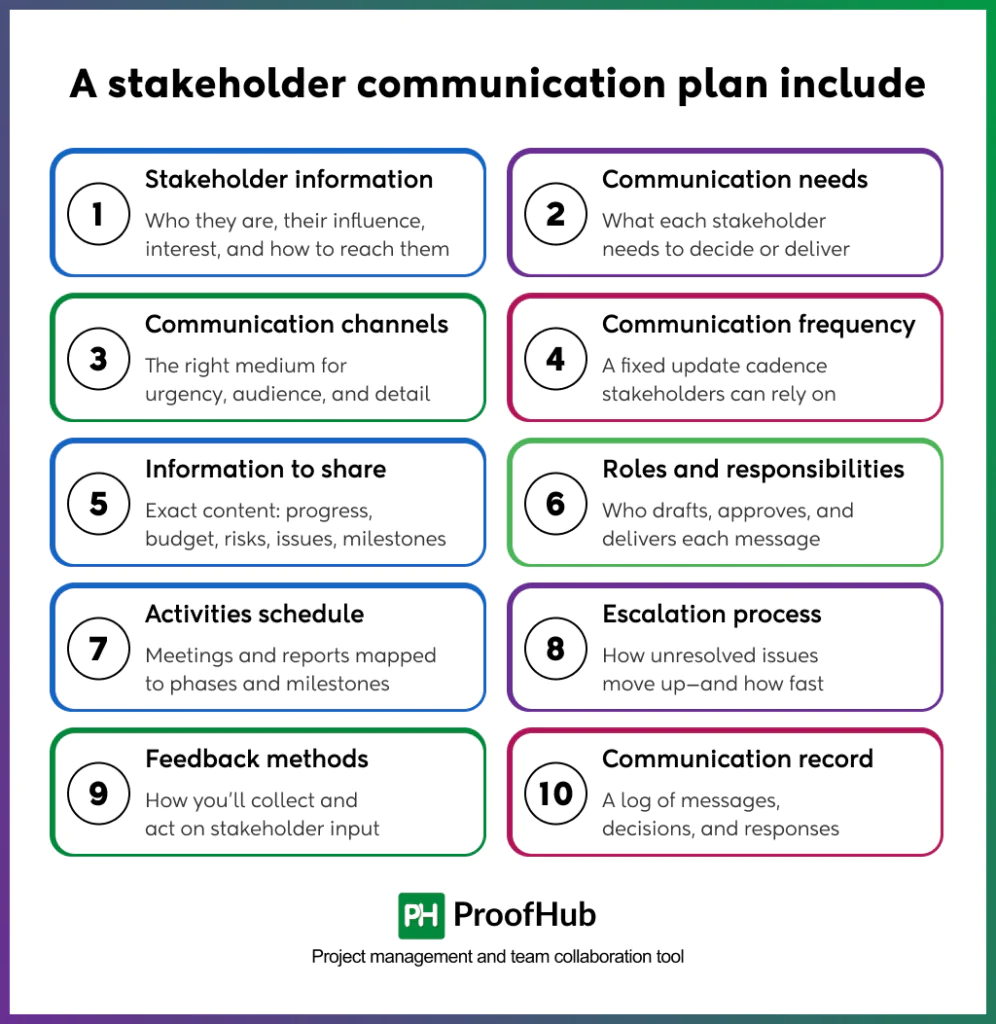
The stakeholder communication plan should include stakeholder information, communication needs, communication channel, communication frequency, information to share, roles and responsibilities, communication activities schedule, and escalation process.
Together, they create a repeatable system that keeps stakeholders aligned and informed. Document all ten elements before starting execution and review them at every major milestone.
- Stakeholder information: Identify every stakeholder, their role, influence level, and interest in the project. Capture contact details and classify each person or group so you can prioritize engagement effectively.
- Communication needs: Define what each stakeholder requires to make decisions or fulfill their role. Distinguish between executives who need summaries, sponsors who need risk visibility, and team members who need task-level detail.
- Communication channels: Specify the medium for each message type, such as email, project management software, status meetings, dashboards, or formal reports. Match the channel to the urgency, audience, and level of detail required.
- Communication frequency: Set the voice for every update, whether daily standups, weekly status reports, or monthly steering reviews. Consistent timing builds predictability and prevents stakeholders from chasing information.
- Information to share: List the exact content you will communicate, including progress, budget status, risks, issues, change requests, and milestones. Clear scope prevents overload and ensures nothing critical goes unreported.
- Roles and responsibilities: Assign an owner for each communication task, including who drafts, approves, and delivers each message. Defined ownership eliminates duplication and ensures accountability for every stakeholder touchpoint.
- Communication activities schedule: Map all planned meetings, reports, and updates on a calendar aligned with project phases and milestones. This gives the team a clear timeline and stakeholders advance notice of engagements.
- Escalation process: Outline how unresolved issues move up the chain, including trigger conditions, escalation levels, responsible decision-makers, and response timeframes. A defined path resolves conflicts and blockers before they threaten deliverables.
- Feedback gathering methods: Document how you will collect stakeholder input through surveys, review sessions, one-on-one conversations, or feedback forms. Regular feedback validates that your messages land and reveals gaps early.
- Communication record: Maintain a log of all communications sent, decisions made, and stakeholder responses. This creates an audit trail, supports accountability, and provides reference material for future projects and dispute resolution.
What are the benefits of stakeholder communication?
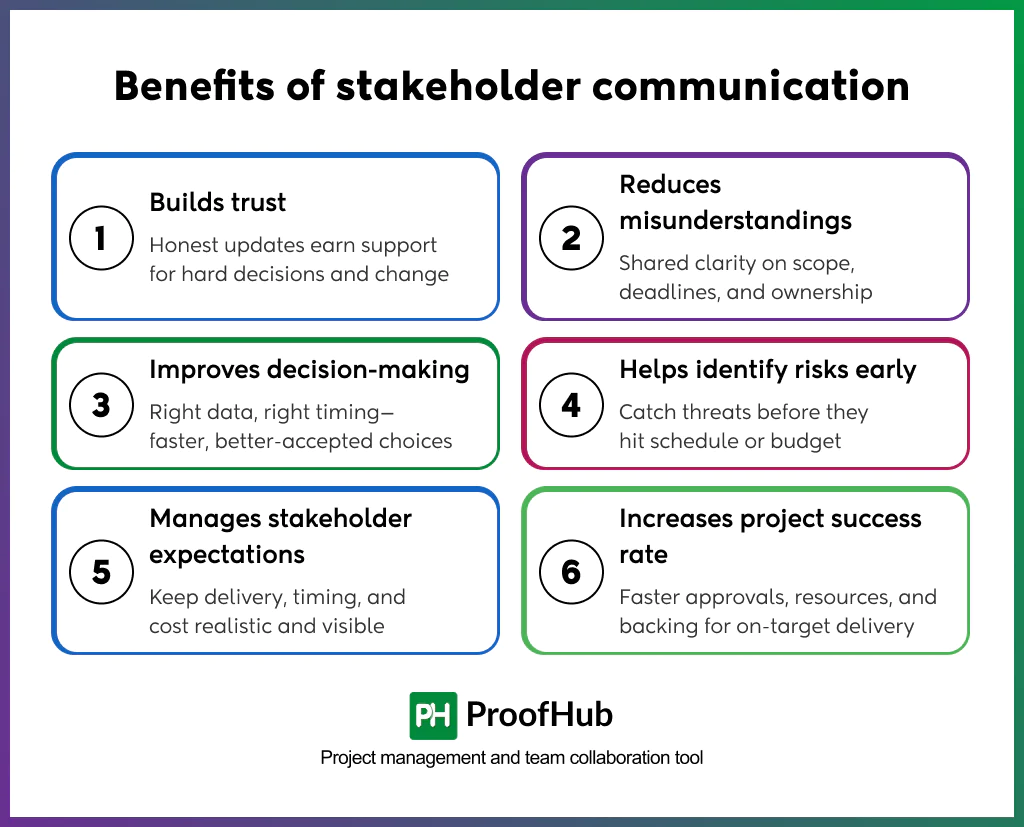
The key benefits of stakeholder communication are, it builds trust, reduces misunderstanding, improves decision-making, helps identify risks early, manage stakeholder expectations, and increases project success rate.
- Builds trust: Consistent, transparent updates show stakeholders that the team is honest about progress, setbacks, and constraints. Over time, this reliability strengthens relationships and makes stakeholders more willing to support difficult decisions and change requests.
- Reduces misunderstandings: Clear, documented messages align everyone on scope, deadlines, and responsibilities. It removes assumptions, limits rework, and prevents conflicts that arise when stakeholders interpret goals, requirements, or priorities differently.
- Improves decision-making: Timely, relevant information gives decision-makers the data they need to evaluate options, weigh trade-offs, and act quickly. Two-way communication also surfaces stakeholder insights that lead to better-informed, more accepted decisions.
- Helps identify risks early: Regular stakeholder dialogue exposes emerging threats, dependencies, and concerns before they escalate. Early visibility lets the team plan mitigation, adjust schedules, and protect budgets rather than react to problems after they cause damage.
- Manages stakeholder expectations: Frequent, realistic updates keep stakeholders aware of what the project will deliver, when, and at what cost. This prevents surprises, limits scope creep, and reduces dissatisfaction at delivery.
- Increases project success rate: Aligned, informed, and engaged stakeholders provide faster approvals, timely resources, and stronger backing. Effective communication ties these advantages together, helping projects finish on time, within budget, and to the expected quality.
What are the types of stakeholder communication?
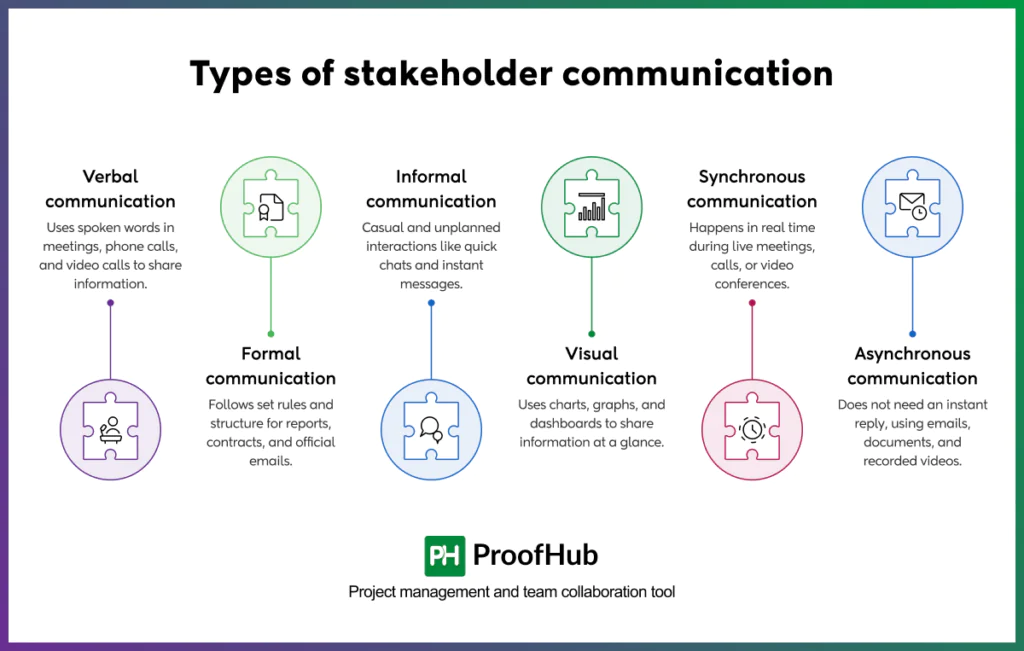
The six types of stakeholders communication are verbal communication, formal communication, informal communication, visual communication, synchronous communication, and asynchronous communication.
Stakeholder communication takes different forms depending on the message, the audience, and the urgency. You can combine several types and choose the right mix to share information clearly and avoid confusion.
1. Verbal communication
Verbal communication uses spoken words to share information with stakeholders.
It is mainly used in meetings, phone calls, and video calls and lets both sides ask questions, clear doubts, and respond right away. Tone and pace also help the speaker show confidence and build trust.
2. Formal communication
Formal communication follows set rules, structure, and approval steps. Teams use it for project reports, contracts, status updates, and official emails.
It creates a clear written record, keeps messages consistent, and works best when the information affects budgets, deadlines, scope, or key decisions.
3. Informal communication
Informal communication is casual and unplanned. Team members use it in quick chats, hallway talks, and instant messages.
It helps you share ideas freely, solve small problems fast, and build strong working relationships. However, teams should record any important decisions made through informal talks.
4. Visual communication
Visual communication uses charts, graphs, dashboards, diagrams, and timelines to share information. It helps stakeholders understand data and progress at a glance.
It shows complex details simply, highlights trends, and keeps busy stakeholders focused on what matters most.
5. Synchronous communication
Synchronous communication happens in real-time. Both sides take part at the same moment, such as in live meetings, calls, or video conferences.
It works well for urgent issues, brainstorming, and quick decisions because people share ideas and get answers right away, without waiting.
6. Asynchronous communication
Asynchronous communication does not need an instant reply. The sender shares a message, and the receiver responds later.
Use emails, shared documents, recorded videos, and project management tools for it. It suits teams in different time zones and gives people time to think before they respond.
What are the common methods for stakeholder communication?
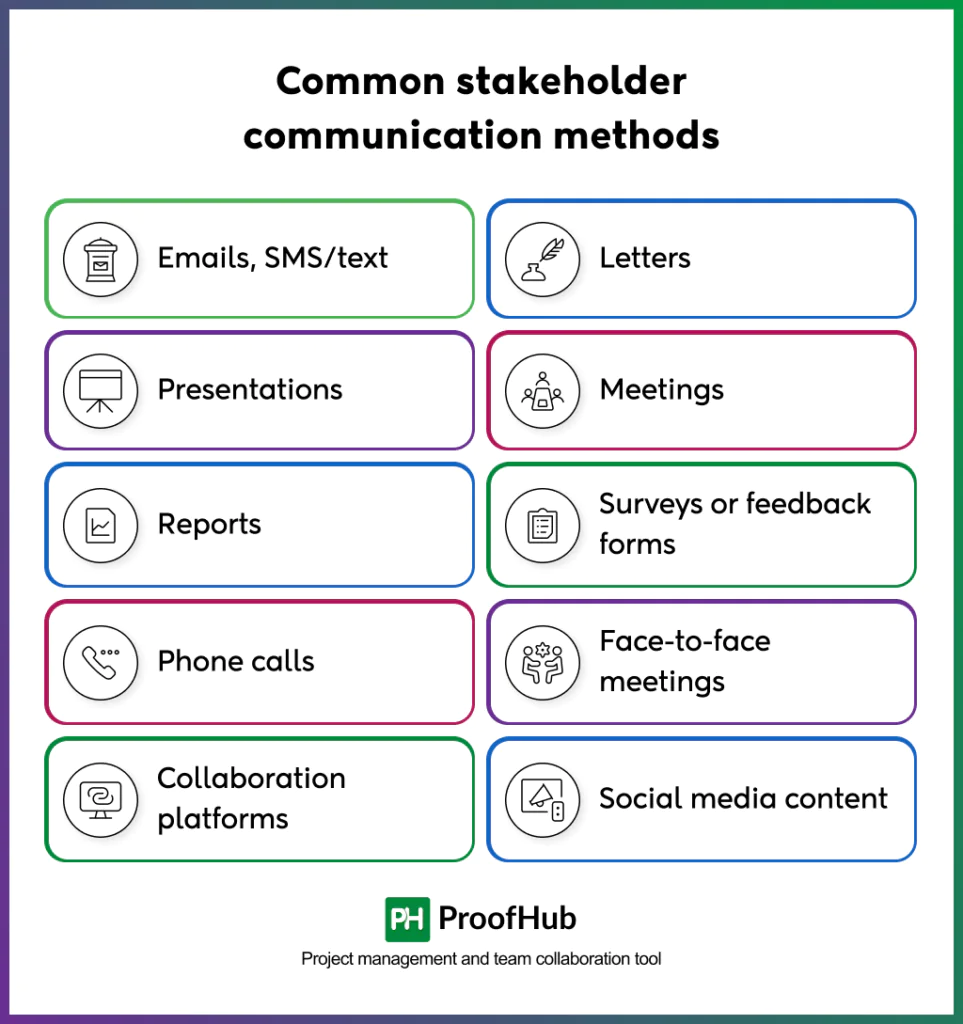
The common stakeholder communication methods are emails, SMS/text, letters, presentation, meetings, reports, surveys or feedback forms, phone calls, face-to-face meetings, collaboration platform, and social media content.
Teams rarely rely on a single method to reach every stakeholder. Each method suits a different message type, audience, and level of urgency.
You should choose methods based on stakeholder preferences and the importance of the information, and review the mix as the project progresses.
- Emails, SMS/text: Teams use these to share quick updates, reminders, and confirmations in writing. They create a simple record and reach people fast. Best for: routine updates and time-sensitive alerts.
- Letters: Letters deliver formal, official messages on paper or as signed documents. They carry weight and create a clear legal record. Best for: contract notices, formal approvals, and external or regulatory stakeholders.
- Presentations: Presentations combine slides and spoken explanation to share plans, progress, or proposals. They help audiences grasp key points quickly and ask questions. Best for: steering committee reviews, project kickoffs, and executive briefings.
- Meetings: Meetings bring stakeholders together to discuss progress, solve problems, and make decisions. They allow open dialogue and quick alignment. Best for: status reviews, planning sessions, and group decision-making.
- Reports: Reports present project data such as progress, costs, risks, and milestones in a structured format. They give stakeholders a reliable reference. Best for: sponsors and managers who need detailed, documented performance information.
- Surveys or feedback forms: These tools collect stakeholder opinions, concerns, and satisfaction levels in a structured way. They reveal gaps and trends early. Best for: gathering input from large or distributed stakeholder groups.
- Phone calls: Phone calls allow direct, real-time conversation without the need to meet in person. They clear doubts fast and add a personal touch. Best for: urgent issues and quick clarifications.
- Face-to-face meetings: Face-to-face meetings allow personal interaction, where body language and tone strengthen understanding. They build stronger relationships and trust. Best for: sensitive discussions, negotiations, and key stakeholder relationships.
- Collaboration platforms: Tools like project management software and team chat apps keep tasks, files, and conversations in one place. They support ongoing updates and shared visibility. Best for: day-to-day coordination with team members and active stakeholders.
- Social media content: Teams share updates, announcements, and project news through public or community channels. It reaches wide audiences quickly. Best for: engaging customers, communities, and external stakeholders who follow project progress.
Best practices to follow for stakeholder communication
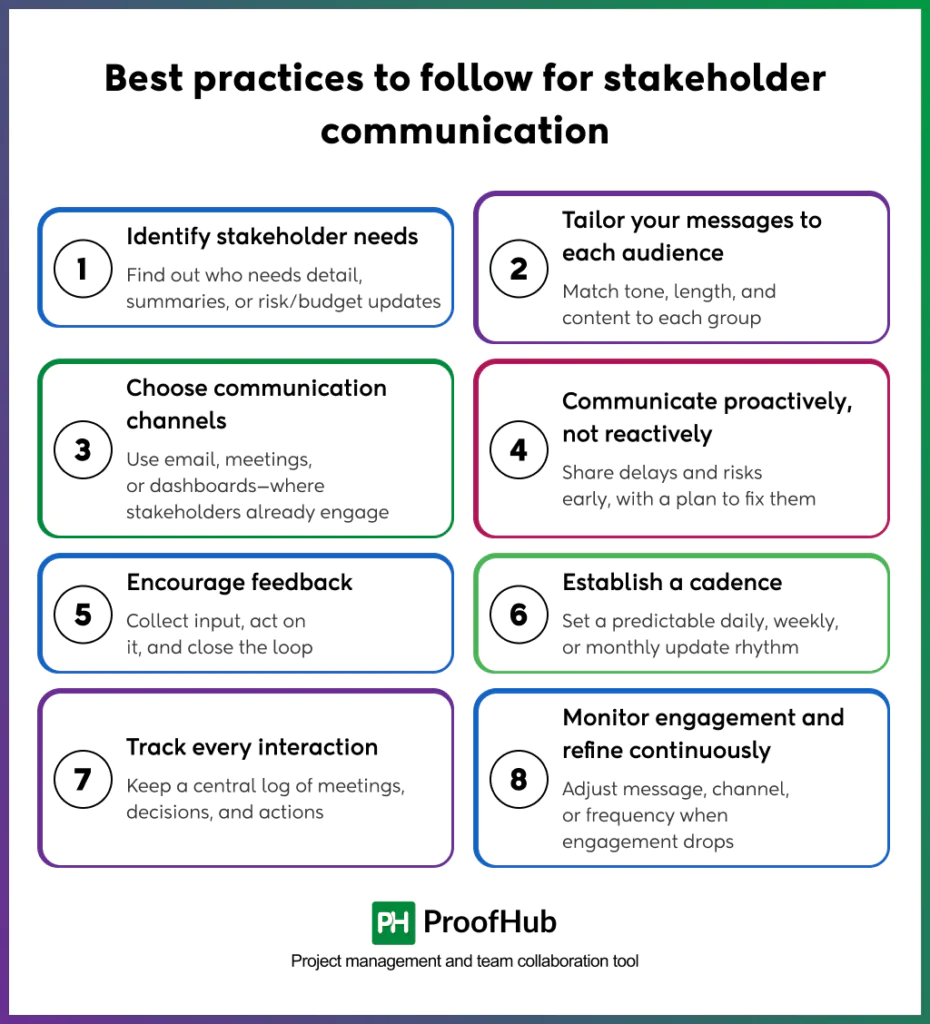
The best practices to follow for stakeholder communication are: identify stakeholder needs, tailor your message to each audience, choose communication channels, communicate proactively, not reactively, encourage feedback, establish a cadence track every interaction, and monitor engagement and refine continuously.
1. Identify stakeholder needs
Start by learning what each stakeholder expects, needs, and cares about. Hold short interviews, review project documents, and ask direct questions.
It shows who needs detail, who needs summaries, and who needs updates on risks, budgets, or timelines.
2. Tailor your messages to each audience
Adjust the tone, length, and content of each message, so every reader understands it quickly and knows what action to take.
Each stakeholder group needs a different message. Executives want short summaries and business impact, while team members need task-level detail.
3. Choose communication channels
Ask stakeholders which channels they prefer, so messages reach people where they already read and respond.
Match each message to the right channel. Use email for routine updates, meetings for decisions, and dashboards for progress tracking.
4. Communicate proactively, not reactively
Early updates prevent surprises, show honesty, and give stakeholders time to respond and support the team.
Share news before stakeholders ask for it. Report delays, risks, and changes as soon as they appear, along with a plan to fix them.
5. Encourage feedback
Invite stakeholders to share their views, concerns, and ideas. Use surveys, review sessions, and one-on-one conversations to collect input.
Act on the feedback and share the outcome. This shows stakeholders that the team listens and values their opinions.
6. Establish a cadence
Set a regular schedule for every update, such as daily standups, weekly status reports, or monthly steering reviews.
A steady rhythm helps stakeholders know when to expect news. It also keeps the team on track and prevents missed or rushed updates.
7. Track every interaction
Record meetings, decisions, emails, and action items in a central log. This record creates a clear trail of what the team said and agreed.
It also helps resolve disputes, onboard new members, and guide future projects.
8. Monitor engagement and refine continuously
Check how well stakeholders respond to updates.Watch meeting attendance, reply rates, and feedback scores.
When engagement drops, change the message, channel, or frequency. Regularly review the communication plan as the project and stakeholders change.
What are the common challenges in stakeholder communication?
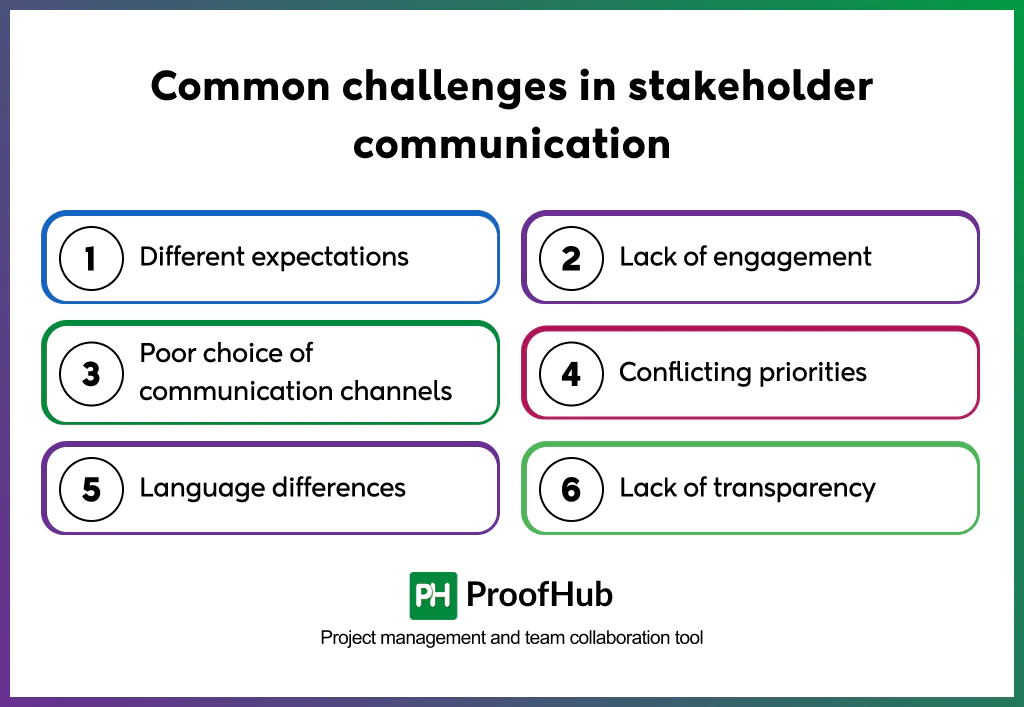
The common challenges in stakeholder communication are different expectations, lack of engagement, poor choice of communication channels, conflicting priorities, and lack of transparency.
- Different expectations: Stakeholders often expect different outcomes, timelines, or levels of detail from the same project. Without alignment, these gaps lead to disappointment, disputes, and rework. Clarify and document expectations at the start.
- Lack of engagement: Some stakeholders ignore updates, skip meetings, or respond late. This delays approvals and hides concerns that could grow into bigger problems. Make messages short, relevant, and clearly linked to each stakeholder’s interests.
- Poor choice of communication channels: Sending a message through the wrong channel means stakeholders may miss it or misread information. A complex issue shared by chat, for example, can cause confusion. Match each message to the right channel.
- Conflicting priorities: Stakeholders often push for different goals, such as speed, low cost, or high quality. These competing demands create tension and confuse the team. Bring stakeholders together, discuss trade-offs openly, and agree on clear priorities.
- Lack of transparency: When teams hide bad news or share incomplete information, stakeholders lose trust and start to doubt every update. Share progress, risks, and setbacks openly, and explain the steps they take to fix problems.
What is a stakeholder communication matrix?
The stakeholder communication matrix is a table that maps each stakeholder to their information needs, preferred channel, communication frequency, message owner, and desired outcome.
It gives project teams a single-glance reference for who receives what, when, and how, and it serves as the working core of the stakeholder communication plan.
How often should you communicate with stakeholders?
Communication frequency depends on each stakeholder’s influence, interest, and role. Communicate daily with core team members, weekly with project sponsors and key decision-makers, and monthly with executives or low-involvement groups.
Increase frequency during critical phases, major risks, or scope changes, and adjust the cadence based on stakeholder feedback.
What is the difference between stakeholder communication and stakeholder collaboration?
Stakeholder communication focuses on exchanging information, mainly delivering updates, reports, and decisions to keep stakeholders informed. Stakeholder collaboration involves working jointly with stakeholders to co-create solutions, share ownership of decisions, and solve problems together.
Communication informs and gathers input, while collaboration actively involves stakeholders in shaping project outcomes.
Conclusion
Stakeholder communication is not a one-time task. It is an ongoing process that keeps everyone aligned from project start to finish. When you know stakeholders, choose the right channels, and share updates on a steady schedule, you prevent confusion and build lasting trust.