

Marketing collaboration is the coordinated effort of teams and partners to create marketing initiatives that jointly achieve shared business goals. It strengthens brand positioning and drives business growth by working together strategically. Brands gain increased reach and visibility, access new customer segments, reduce marketing costs, and enhance credibility through partnership.
Marketing collaboration also boosts innovation and creativity by combining diverse perspectives, builds stronger long-term relationships, and enables organizations to compete more effectively in the market.
To utilize marketing collaboration effectively, run joint campaigns, launch co-branded content, organize events collectively, and create content together to drive tangible business results and strengthen brand partnerships.
Running a joint campaign comes with several challenges, including siloed workflows, unclear ownership, version control issues, and collaboration overload. To mitigate challenges, define objectives clearly, centralize asset libraries, create structured review cycles, and ensure data-driven alignment with sales and product teams.
Using the right tools makes collaboration operational, helps avoid conflicts and data discrepancies, manages files, and streamlines communication.
This article covers the benefits of marketing collaboration, proven strategies, examples, practical steps to launch successful campaigns, and the challenges companies face when collaborating on marketing.
What is marketing collaboration?
Marketing collaboration (also known as co-marketing or partnership marketing) is the coordinated process in which two or more marketing teams, brands, or businesses work together to plan and execute joint campaigns, products, content, or events for mutual exposure, shared audience reach, and combined value creation. It strategically connects brands with overlapping audiences so that both can gain visibility, leads, and market trust.
Instead of promoting in isolation, each marketing partner contributes resources and budget to achieve goals that are harder or slower to achieve on their own. When done effectively, it reduces campaign cost, accelerates reach, boosts innovation through shared ideas, and increases ROI by tapping new customers.
In simple terms, it is a mutually beneficial marketing partnership designed to amplify impact beyond what a single brand can achieve on its own.
What are the benefits of marketing collaboration?
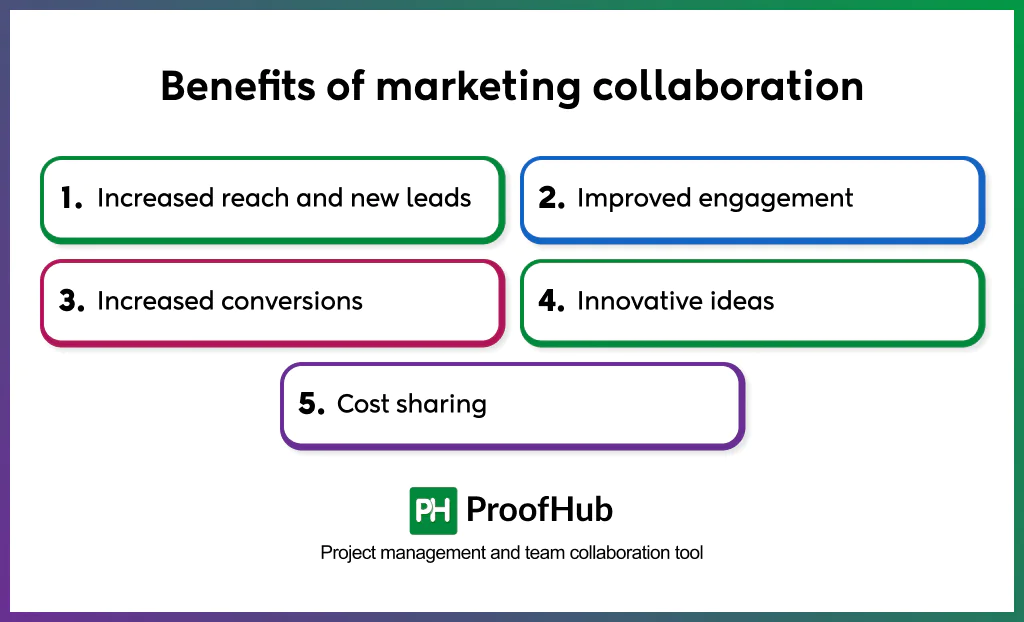
Marketing collaboration offers benefits such as increased reach, brand visibility, shared costs, and enhanced credibility. It also promotes innovation by combining different expertise, builds stronger long-term relationships, and provides access to new markets and customer bases.
1. Increased reach and new leads
Collaborating with other brands provides direct access to their existing customer base, who already trust them. By cross-promoting your products to an established audience, you tap into potential customers who were previously unaware of your business. This mutual audience sharing exponentially increases the brand’s visibility without requiring you to build that trust from scratch.
2. Improved engagement
Collaboration brings fresh and diverse content that captures attention better than solo marketing efforts. When two brands combine their expertise, they create more compelling campaigns that relate to wider audiences by blending different perspectives and creative approaches. This dynamic content keeps your target audience more interested and engaged compared to monotonous solo campaigns.
3. Increased conversions
Partnering with established brands increases conversions by expanding the brand’s reach.
The combined authority and credibility of both brands working together reduces buyer hesitation and builds stronger trust with potential customers. When customers see two reputable brands endorsing a product or service together, they feel more confident making a purchase decision.
4. Innovative ideas
Collaborating with external partners creates an environment for exchanging information that sparks innovative ideas and problem-solving methods. Different teams contribute unique insights, industry knowledge, and fresh perspectives that you might not have developed independently. Collaborative brainstorming sessions challenge conventional thinking patterns and push creative boundaries, helping you learn new techniques, tools, and strategies that improve your overall marketing effectiveness.
5. Cost sharing
Marketing collaboration reduces individual expenses by dividing costs among partners, making premium marketing channels and tools more affordable for both parties. Shared resources allow you to access high-quality production and advanced platforms that might otherwise be financially prohibitive when purchased individually. This cost efficiency enables smaller businesses to run larger-scale campaigns and compete more effectively with larger players in the market.
What are the strategies for marketing collaboration?
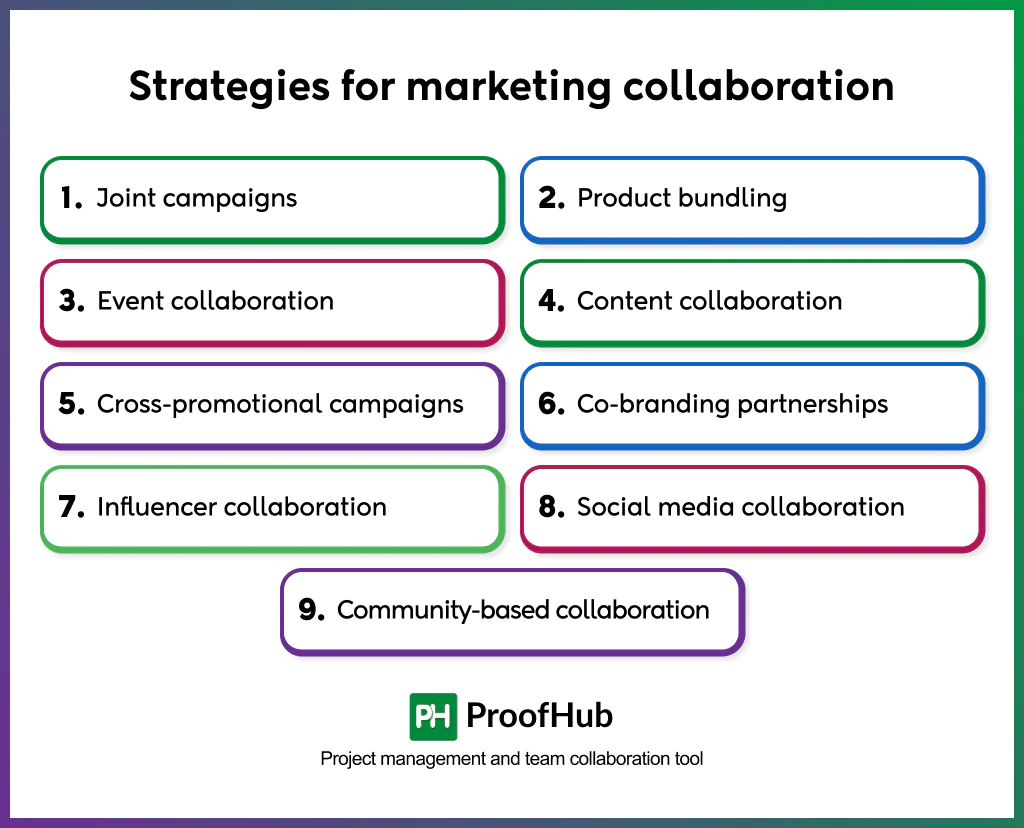
Running joint campaigns to market products to a similar target audience, creating value packages to address multiple customer needs, organizing collective events, and creating content together to multiply reach are some of the strategies for marketing collaboration between brands.
1. Joint campaigns
Joint campaigns help brands coordinate their efforts to launch promotions and advertisements that benefit all partners. This strategy works well when brands share similar target audiences but offer different products, allowing them to reach customers without duplicating marketing efforts. By promoting each other within a single campaign, the combined reach and impact are significantly amplified, giving each brand exposure to an audience it might not have reached on its own.
2. Product bundling
Product bundling creates value packages that address multiple customer needs by combining complementary products or services from different companies into a single discounted offering. This strategy works when products naturally fit together in the customer journey. By bundling related offerings, brands increase customer perceived value while driving higher sales volumes and customer satisfaction for all partners involved.
3. Event collaboration
Event collaboration allows brands to interact directly with potential customers while sharing planning responsibilities, venue costs, and promotional efforts to reach a larger combined audience. Co-hosted webinars enable partners to share expertise and split registration lists, while joint participation in industry events increases both traffic and visibility without doubling expenses. Each partner brings their own audience to the event, effectively multiplying attendance and creating a win-win scenario for all collaborators.
4. Content collaboration
Content collaboration allows brands to combine their expertise and audiences to create stronger, more engaging content. This shared effort brings the unique perspective and knowledge of each partner, resulting in richer, more valuable content for the audience. By pooling resources and creative talent, content collaboration increases reach, boosts credibility, and attracts new customers, ultimately driving higher engagement and conversions for all brands involved.
5. Cross-promotional campaigns
Cross-promotional campaigns help brands to reach new audiences by using each other’s existing customer bases and marketing channels to promote complementary products or services. Each partner advertises the other’s offerings through their own platforms, whether that’s email lists, social media, websites, or physical stores, creating multiple touchpoints with qualified prospects. This strategy works because recommendations come from trusted sources that customers already follow and value.
6. Co-branding partnerships
Co-branding brings two brands together to promote a shared offering that creates greater impact than either could achieve alone, expanding reach and boosting credibility through combined strength. This joint effort expands reach, boosts credibility, and blends strengths to create value neither could achieve alone. The partnership also reduces individual marketing effort while giving customers a more memorable, trust-driven experience.
7. Influencer collaboration
Influencer collaboration connects a brand with someone who already has influence and trust within a specific audience. This alignment helps a brand enter conversations already happening and deliver messages through a voice people pay attention to. Both sides benefit through expanded reach, high engagement, and strong conversions without the need for traditional campaigns.
8. Social media collaboration
Social media collaboration helps each partner tap into new followers, boost visibility, and build trust faster through association. Both partners gain more traction by combining creative assets, reach, and engagement than they would ever get by posting alone. It helps brands expand reach and credibility by co-creating posts that expose each partner to the other’s audience.
9. Community-based collaboration
Community-based collaboration gives the brand authentic access to engaged members, builds trust through shared purpose, and strengthens loyalty. It provides visibility and long-term engagement to both partners by co-creating events, content, or initiatives.
What are the challenges of marketing collaboration?
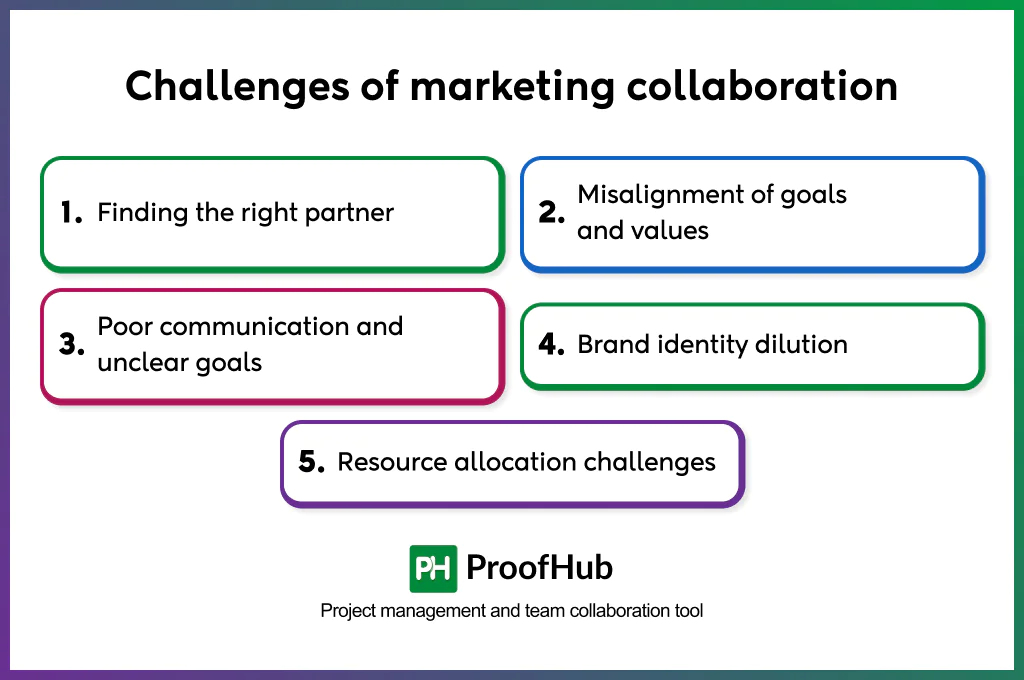
The significant challenges of marketing collaboration include finding the right partner, misalignment of goals, poor communication, and resource allocation. Below are the core challenges that most often lead to partnerships breaking down.
- Finding the right partner
Identifying a brand that shares your values, has a complementary target audience, and is genuinely committed to investing in the collaboration can be difficult. Many potential partners may seem suitable on the surface but lack the cultural alignment or long-term commitment necessary for successful collaboration.
- Misalignment of goals and values
When brands have different objectives, expectations, or corporate cultures, they face significant difficulties in collaborating effectively. Conflicting priorities can lead to disagreements about campaign direction, target audience focus, and desired outcomes, undermining the partnership.
- Poor communication and unclear goals
Failing to define clear roles, responsibilities, and expectations from the start creates confusion and conflict between collaborators. Without transparent communication channels and documented agreements, misunderstandings escalate quickly and damage the working relationship.
- Brand identity dilution
Collaborations can weaken the distinct identity and equity that each brand has individually built over time. When brands merge their identities too closely, they risk losing their unique positioning and what makes them recognizable to their core audience.
- Resource allocation challenges
Determining how much each brand invests, what resources they contribute, and how costs are divided creates friction and complexity. These unequal resource commitments or unclear budget agreements lead to disputes and unbalanced partnerships.
What are the best practices to follow for marketing collaboration?
Marketing collaboration works best when teams align around shared goals and maintain clear, ongoing communication. It begins with setting well-defined objectives and roles so everyone understands what the partnership aims to achieve and who is responsible for each task.
This clarity prevents duplicated effort, confusion, and delays in decision-making. Consistent communication through regular check-ins, status updates, and shared documentation helps teams stay aligned, especially when multiple departments or external partners are involved.
Creating shared resources and standardized workflows also strengthens collaboration. Centralized templates, brand guidelines, content calendars, and approval processes ensure consistency and make joint work more efficient. Setting realistic timelines with adequate notice, clear dependencies, and buffer time for feedback helps avoid rushed execution and maintains the quality of the final output.
Clear approval pathways are equally important. Defining who signs off at each stage prevents last-minute rejections and unnecessary rework. Leveraging collaborative tools such as project management platforms, shared drives, and communication apps reduces friction and keeps all partners informed. Documenting decisions and changes along the way preserves context and prevents misunderstandings.
Building structured feedback loops encourages open idea-sharing and early problem-solving, which enhances creativity and strengthens the campaign. Celebrating shared wins reinforces strong relationships and motivates future collaboration. Finally, conducting a thoughtful post-project review allows teams to analyze what worked, address gaps, and carry forward actionable learnings, ensuring each collaboration becomes more effective than the last.
Examples of marketing collaboration
Some of the marketing collaborations examples include:
1. Starbucks & Spotify
Starbucks and Spotify collaborated to create a seamless music experience in Starbucks stores, allowing customers to develop in-store playlists through the Spotify app while enjoying their coffee. This collaboration benefited both brands by increasing customer engagement in Starbucks locations while giving Spotify users a new interactive touchpoint, ultimately strengthening brand loyalty and creating a memorable customer experience that neither brand could achieve on its own.
2. Kanye West and Nike (Yeezys)
Kanye West partnered with Nike to create the Yeezy line of sneakers, Nike Air Yeezy. This collaboration proved to be highly successful because it helped Nike to win new audiences from Kanye’s fan base. This collaboration benefited Nike’s product line in the luxury fashion space while yielding Kanye West substantial royalties.
3. BMW and Louis Vuitton
BMW and Louis Vuitton collaborated to target luxury consumers. Louis Vuitton designed a custom four-piece luggage set designed specifically for the plug-in hybrid BMW i8. This partnership aligned both brands’ emphasis on craftsmanship and exclusivity, offering a premium experience that appealed to high-end buyers.
4. Uber & Spotify
Uber and Spotify collaborated to create “Soundtrack Your Ride,” which lets riders connect their Spotify accounts and control the music during their trip. This collaboration enhanced the ride-sharing experience and gave both brands a unique competitive edge.
5. McDonald’s and Burger King
In the ‘a day without a whopper’ campaign, Burger King removed the Whopper from its menu for a day and encouraged customers to buy a Big Mac instead. This collaboration resulted in McDonald’s boosting its impact and Burger King earning massive respect.
Best tools for marketing collaboration
The best tools for marketing collaboration include platforms for project management, communication, creative production, and specialized marketing tasks like SEO and social media management. The ideal “stack” of tools depends on specific team needs and existing workflows.

Let’s understand which tools are best suited to the team’s needs!
Core project management and collaboration tools
These tools help plan campaigns, assign tasks, set deadlines, and track progress, often using visual interfaces like Kanban boards or Gantt charts.
- ProofHub: A project management and team collaboration software that includes task management, discussion boards, proofing tools, and time tracking in one central location.
- Asana: A powerful platform for breaking down complex campaigns into manageable tasks, assigning ownership, and tracking progress with various views.
- ClickUp: An all-in-one workspace that combines tasks, documents, whiteboards, and chat, known for its high level of customization.
Communication
- Slack: A channel-based messaging platform that organizes conversations by project or team and integrates with numerous marketing tools.
- Microsoft Teams: An integrated platform combining chat, video meetings, and file sharing within the Microsoft 365 ecosystem.
- Zoom: A leading tool for high-quality video conferencing, webinars, and screen sharing, essential for client meetings and virtual presentations.
Creative & content production
- Canva: An intuitive, cloud-based design platform with extensive templates, allowing non-designers to create professional-looking visuals with real-time collaboration features.
- Adobe Creative Cloud: The industry-standard suite of applications for professional design and editing, with cloud storage and collaboration features for creative teams.
Specialized marketing functions & automation
- HubSpot: A comprehensive CRM and marketing automation platform that aligns marketing and sales teams, manages leads, and tracks customer interactions in one place.
- Zapier: An automation tool that connects various apps and services, allowing you to build custom workflows and automatically sync data between your different marketing tools without coding.
How to launch an effective collaborative marketing campaign?
Launching an effective collaborative marketing campaign starts with choosing the right partner, one whose values, audience, and brand quality align with your own. Once the partnership is confirmed, both teams must clearly define shared goals and success metrics to avoid misalignment later.
From there, select the right type, whether a co-branded product or cross-promotion, to ensure the collaboration appeals to each brand’s strengths.
To execute smoothly, both teams should establish clear roles, responsibilities, and resource contributions. Throughout the process, consistent communication keeps both partners aligned and allows quick problem-solving. Once launched, real-time monitoring helps optimize the campaign, and a final evaluation enables both brands to review results, share insights, and strengthen the foundation for future collaborations.
What is the difference between marketing and business collaboration?
The key difference between marketing and business collaboration lies in scope and objectives. Marketing collaboration focuses specifically on joint campaigns, promotions, and audience reach between two brands. Business collaboration focuses on improving overall operations, innovation, and growth by partnering with internal and external teams across departments, clients, suppliers, or organizations.
In marketing collaboration, the goal is brand exposure, shared marketing resources, and higher ROI from co-created marketing activities. It revolves around content co-creation, product launches, events, sponsorships, or cross-promotions.
Business collaboration aims to improve workflow efficiency, solve problems, share knowledge, develop products, and support strategic decision-making. It may involve design, sales, operations, development, finance, or any cross-team collaboration.
What’s the real impact of strong marketing collaboration?
Marketing collaboration impacts the audience reach, brand visibility, credibility, customer perception, revenue and ROI of the business. It allows businesses to share resources, audiences, and data insights, and to utilise each other’s marketing channels without substantial cost.
Co-marketing leads to better market penetration, innovative ideas, and faster results than working alone. It also reduces campaign risks by splitting cost and effort, while increasing output value through collective expertise.
What KPIs can track success in marketing collaboration?
KPIs can help measure the effectiveness of marketing collaboration efforts. Campaign and revenue metrics track the direct output of collaborative work, including cost per acquisition, which measures how efficiently collaborative campaigns convert prospects into customers, and return on ad spend (ROAS), which shows the revenue generated for every dollar spent on marketing.
Attribution modelling reveals which collaborative campaigns or touchpoints drive conversions, helping teams understand which joint efforts work best.
Team alignment and efficiency metrics assess how well teams are actually working together. Time-to-campaign-launch measures how quickly teams can move from planning to execution when collaborating effectively. At the same time, internal feedback scores or collaboration satisfaction surveys capture whether teams feel their cross-functional partnerships are productive.
Reduced campaign revision cycles or rework can indicate smoother collaboration among creative, marketing, and other departments.
Content and engagement metrics reflect the quality of collaborative output. Content performance metrics, such as engagement rate, click-through rate, and shares, indicate whether collaborative creative work resonates with audiences. Lead quality scores reveal whether collaborative campaigns are attracting the right prospects rather than just high volume, suggesting that teams have aligned on audience targeting and messaging.
How does marketing collaboration improve ROI?
Marketing collaboration improves ROI by sharing resources, audience reach, and expertise, it reduces overall campaign cost and increases conversions. When two brands market together, they share content creation, advertising expenses, and distribution channels, which reduces cost-per-acquisition and increases overall return.
Collaboration allows teams to exchange values rather than just expenditure. For example, Brand A offers a strong social reach while Brand B has a substantial email list. Both gain measurable visibility and lead with minimal incremental cost. Co-marketing enhances credibility and trust, speeding buyer decisions and raising campaign efficiency.