

The biggest challenge in managing work is that you cannot plan for everything.
There are always some projects or unexpected requirements that arise and need to be completed on short notice. These uncertain and unplanned projects are known as ad hoc projects.
Depending on the complexity and scope of the work, the impact on the existing workflow can be significant. It disrupts the current workflow, delays existing projects, and makes it difficult to keep track of the resources (financial, time, and human)-though the severity varies.
In this post, we will look at what exactly an ad hoc project is, how it can impact the workflow, and some practical ways to manage ad hoc projects.
- 1.Ad hoc projects are unexpected, one-time initiatives created to address immediate needs, often with tight deadlines and specific objectives.
- 2.Tracking and prioritizing ad hoc work is essential to maintain visibility, manage resources effectively, clarify accountability, and prevent disruption to planned projects.
- 3.A clear scope and approval process helps control ad hoc work by defining objectives, responsibilities, resources, risks, deadlines, and the potential impact on existing projects.
- 4.Ad hoc projects can strain teams and workflows by causing missed deadlines, resource conflicts, reduced work quality, and employee burnout when they occur frequently.
- 5.Using project management tools and maintaining resource buffers can help teams organize unexpected requests, streamline workflows, reallocate resources, and complete urgent projects without losing control of planned work.
What are ad hoc projects?
Ad hoc projects are unplanned, unexpected, one-time projects that are created to solve an immediate problem rather than being part of a planned roadmap or recurring work.
Ad hoc is a Latin phrase that literally means “for this” or “for this purpose only”. In English, it means something done or arranged for a particular need rather than a permanent, pre-planned system.
Characteristics of ad hoc projects
- Unplanned: They are unplanned and arise unexpectedly.
- Specific objective: They focus on achieving a single goal.
- Time-sensitive: They have tight deadlines.
- Temporary: They end when the objective is met.
- Non-recurring: They are for one-time, not likely to be repeated.
What is the importance of tracking ad hoc projects?
Tracking ad hoc projects is important because it improves project visibility, resource management, prioritization, accountability, and performance measurement.
- Better visibility: Helps management know what extra work teams are handling outside their regular responsibilities.
- Effective resource management: Helps to track people, time, budget, and tools being used, making it easier to identify resource constraints.
- Better prioritization: Allows teams to compare ad hoc requests with planned projects and decide what should be handled first.
- Clear accountability: Everyone knows who is responsible for each task, its status, deadlines, and outcomes.
- Better performance measurement: Provides data on how many ad hoc projects are completed and whether they achieve their objectives or not.
Examples of ad hoc projects
Example 1: A critical bug is discovered in a software product just before launch. The development team must drop their planned work to fix the issue immediately.
Example 2: A company faces a sudden PR crisis due to a negative social media post. The marketing team must create and execute a damage control campaign within hours.
Example 3: A last-minute request to organize a corporate event for a high-profile client. The event team must quickly arrange venues, catering, and logistics.
How to manage ad hoc projects?

There are certain steps you can take to manage ad hoc projects. Have a look at some of the ways to manage ad hoc projects.
1. Analyze the impact and prioritize the projects
Analyze the impact of shifting resources from one project to another and choose which project should take the impact.
Make sure your existing projects do not get delayed or miss their planned timelines due to the ad hoc projects.
To analyze the impact, you can perform impact analysis by considering the following criteria:
- Strategic alignment: Does the project align with your organization’s goals, objectives, and priorities?
- Urgency: How quickly does the project need to be addressed?
- Impact: How does the project impact business?
- Risk: What are the potential risks of doing or not doing the project?
- Resource requirements: What resources (time, budget, people) are needed?
- Return on investment (ROI): What value will the project deliver?
- Dependencies: Does the project affect other ongoing projects?
Based on these criteria, you can prioritize the projects. Ensure that any resource shift does not compromise your existing project timelines and key milestones. Avoid shifting resources from a critical project if doing so could cause missed deadlines or delays.
2. Clearly define the scope and role of the teams
After the impact analysis of the project, clearly define the project objectives, expected outcome, deliverables, timeline, team responsibilities, and dependencies.
Each person should understand their role and expected outcome. This prevents duplication of work and ensures that accountability is established from the beginning.
A poorly defined scope can result in additional work and unnecessary resource consumption.
You can use a project management tool like ProofHub to assign responsibilities, see who is working on what, how much workload & what type of projects are on someone’s plate.
3. Document and formalize the project
Create a document outlining the parameters such as reason for initiating the project, estimated effort, required resources, project owner, key stakeholders, target completion date, dependencies, assumptions, key risks, and Impact on existing projects.
This creates transparency and provides a record of why the project was initiated. Formalizing the project also makes it easier to track progress and identify when the project is consuming more resources than originally expected.
4. Formalize the project approval process
After documenting the project, an ad hoc project should get approval from stakeholders before starting. This makes sure stakeholders understand the key details of the project before the organization starts working on it.
The approval process clearly communicates:
- Why the project is required
- What resources are required
- Which existing projects or activities may be affected
- What risks exist
- What happens if the project is not undertaken
- What timeline is expected
- Who will be accountable for delivery
This makes the decision transparent and helps teams prevent accountability for delays caused by changes in priorities.
5. Allocate time and resources for unexpected tasks
Allocate the buffer time and resources to cater to ad hoc projects. You can use past data and trends to make predictions and find better ways to deal with ad hoc projects.
The extent of the buffer, both in terms of time and funds, is decided by the organization. It can be anything between 5-20%. The essence is that some kind of buffer is better than no buffer at all.
What challenges do ad hoc projects create for organizations and teams?

Ad hoc projects disrupt existing workflows, lead to missed deadlines, result in poor resource utilization, reduce the quality of work, and cause team burnout. Below is a detailed explanation:
1. Disruption of the existing workflow
Ad hoc projects disrupt the existing workflow as team members have to shift from their currently planned tasks to new work requests.
Ad hoc projects disrupt the existing workflow as team members have to shift from their currently planned tasks to new work requests.
2. Missed deadlines
Ad hoc projects lead to delays and missed deadlines of already allocated tasks because resources have to work on other immediate tasks.
For example, a software team working on a new feature might have to drop everything to fix a critical bug. This leads to a delay in the feature release of the currently active project.
This can lead to a backlog of work and impact the relationship with project stakeholders.
3. Poor tracking and utilization of resources
Ad hoc projects consume time, budget, and resources that aren’t allocated in advance. It causes challenges in tracking and effective utilization of resources because you have to move from one project to another.
This leads to poor management of time and the company’s resources.
4. Reduced quality of work
Ad hoc projects have little time to plan or document processes; hence, the quality of the work reduces.
Without sufficient planning and standardized processes, outcomes become inconsistent, as different team members approach the same problem differently. Thus, results may vary in quality.
5. Team members’ burnout
Ad hoc projects often require quick turnarounds, which may require teams to work extra hours or on tight schedules.
If it happens frequently, employees feel like they’re always in “crisis mode” because there is no structured process of project approval. This makes project teams feel overwhelmed over time, leads to burnout, decreased morale, and higher stress.
Manage ad hoc projects with ProofHub
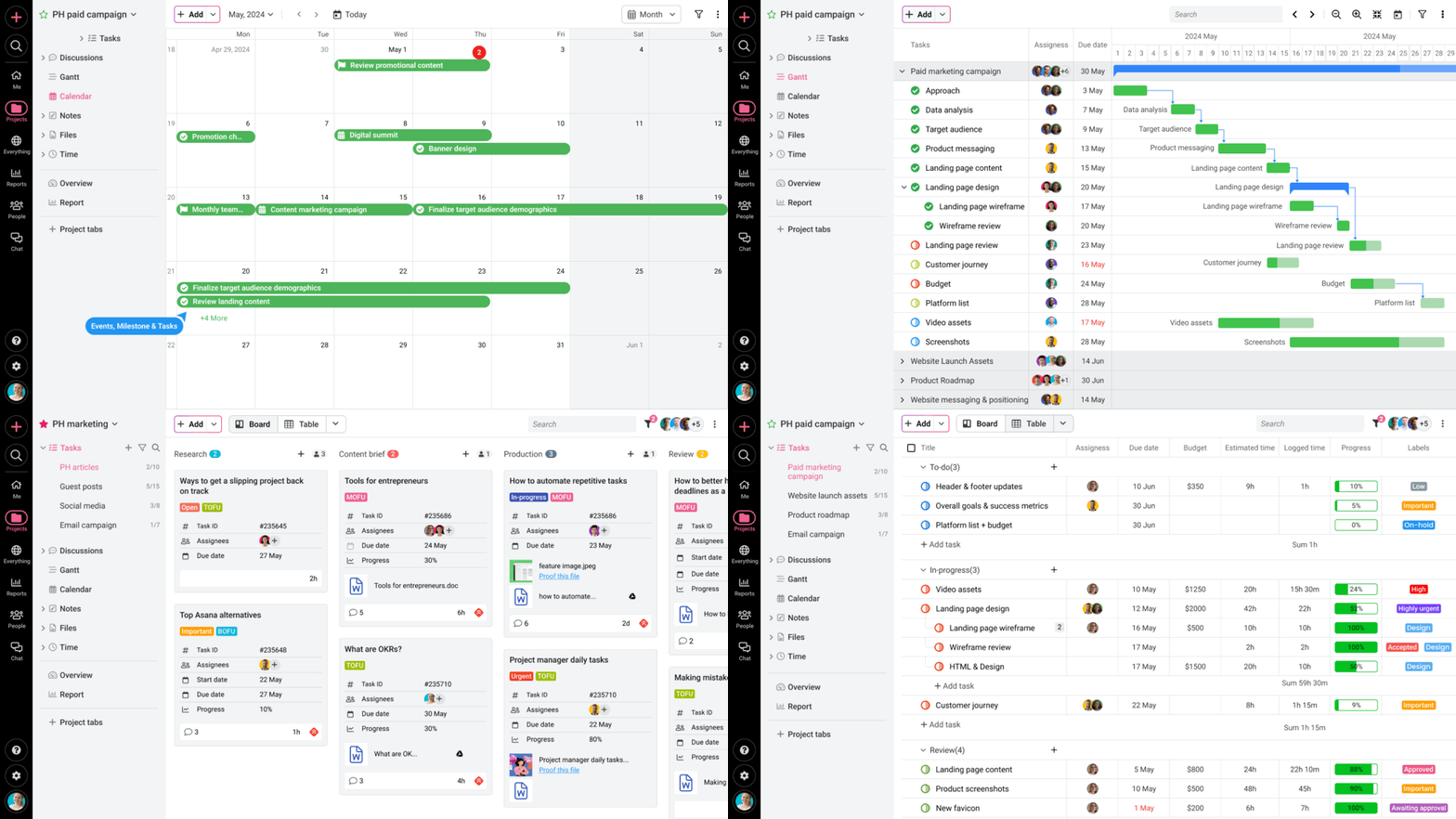
Project management software is the best way to manage projects and entertain ad hoc work requests. Here is a brief explanation of how all-in-one project management and team collaboration software like ProofHub helps you manage ad hoc projects:
- Enhanced visualization of all the projects: Visualize all the projects from multiple views with Board, Table, and Calendar. This makes it easy to keep track of all the projects, reschedule projects, and reallocate resources to accommodate ad hoc projects.
- Centralized task management: Create, assign, prioritize, and track tasks from a centralized place. Everyone can see who is working on what, what needs to be done, who is responsible, and which tasks require quick attention.
- Advanced planning of the projects: Plan projects, allocate resources, and set priorities in advance to ensure work stays on track. You can easily identify available resources and handle unexpected projects more efficiently with advance planning.
- Streamlined workflow of ad hoc projects: Create standardized workflows to manage incoming ad hoc requests and move them through different stages. This helps teams evaluate, assign, prioritize, and track unexpected work without disrupting established processes.
- Facilitate collaboration in real-time: Enable team members to communicate, share updates, exchange files, and collaborate in real time. This keeps everyone informed and reduces delays caused by miscommunication.
FAQs:
What is an ad hoc manager?
An ad hoc manager is someone who takes on temporary leadership roles for specific, unplanned projects. He coordinates resources, manages teams, and ensures the project’s completion without being in a permanent managerial position.
How can I balance ad hoc projects with ongoing responsibilities?
Prioritize tasks, allocate time for unexpected work, and use task management tools. Communicate with your team, delegate effectively, and stay flexible to adapt without compromising long-term goals.
What skills do I need to become better at managing ad hoc projects?
You need to learn problem-solving, time management, and decision-making skills. Learn agile methodologies, stay organized with digital tools, and practice adaptability by handling unexpected challenges effectively.
What is the difference between an ad hoc project and a planned project?
An ad hoc project is an unexpected, one-time task created to solve an immediate problem. It is unplanned and requires teams to quickly allocate resources and adjust existing priorities.
Whereas a planned project is defined and approved in advance with clear objectives, timelines, budgets, and resources. It follows a structured process and aligns with the organization’s goals.
