

Collaboration is a working method that involves people working together in alignment with shared goals to deliver efficient outcomes that would otherwise be impossible to achieve when teams work in isolation or in fragments.
Collaboration examples are essential for showing what actually changes and how execution accelerates when teams align. They give leaders and contributors a clear snapshot into everyday business situations, revealing how different teams share knowledge, solve problems, remove friction, and achieve measurable progress together.
Further, these examples demonstrate how teams adopt collaboration as a strategy and incorporate proven practices into their workflows to enhance team productivity, streamline business operations, and drive sustainable growth built on shared efforts.
Here are a few examples of collaboration across different teams and scenarios to understand how it looks, flows, and impacts real business environments:
1. Example of internal collaboration
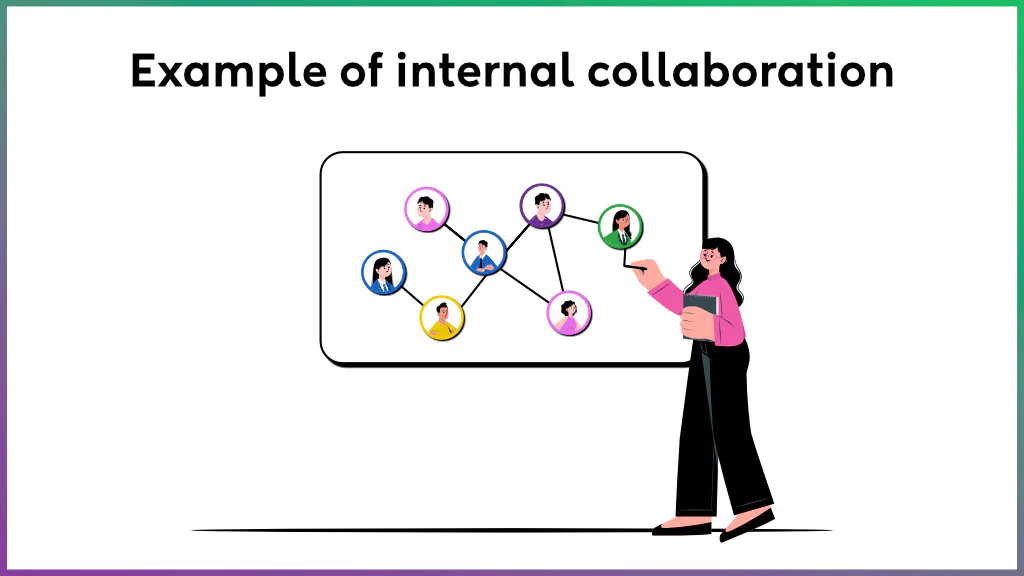
A marketing team aims to increase organic sign-ups by 25%. The SEO Specialist analyzes the website’s current performance and spots a low-ranking feature page with high search potential. They compile a list of search-intent keywords competitors already rank for and share it with Content Writers, who rewrite the page messaging to better match expectations.
Once the revised copy is reviewed and approved by a Proofreader, the Graphic Designer updates visuals to match the refreshed direction. Instead of working in silos, everyone collaborates to restructure the page and optimize elements altogether to boost visibility and meet objectives.
2. Example of external collaboration
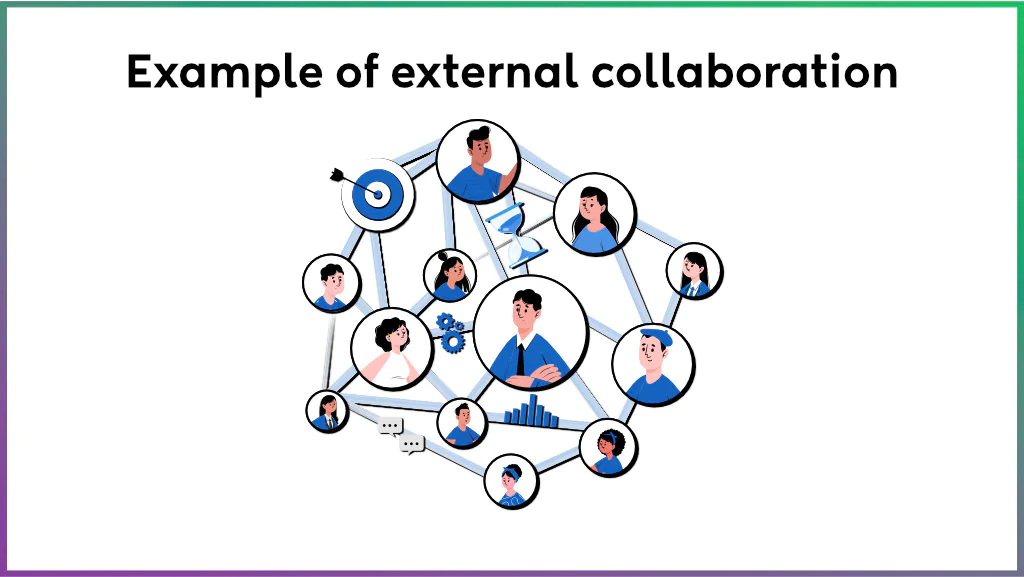
A company is expanding into Southeast Asian markets and partners with a localization agency to gain regional cultural insights and understand local market behaviours.
By combining market cues with the brand direction, both teams co-create campaigns and adapt messaging to local preferences, enabling the audience to engage with the brand confidently. This shared execution helps the brand gain immediate relevance and drive faster adoption in new regions.
3. Example of business collaboration
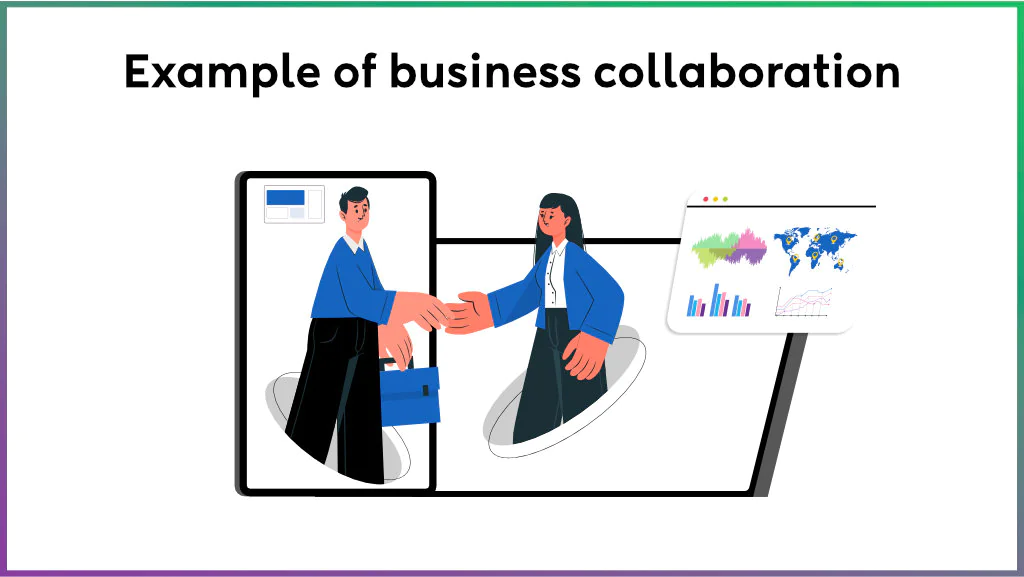
A SaaS company partners with an outsourced support provider to manage customer queries and concerns.
The SaaS team shares basic customer concerns, product knowledge, and the escalation workflow so that support agents follow the same standards the brand promises.
In return, the service provider assigns trained employees to 24/7 availability, so customers receive timely help. This coordinated action maintains service continuity, prevents backlogs, and shortens resolution cycles, while internal SaaS teams focus on feature improvements and product enhancements.
4. Example of strategic collaboration
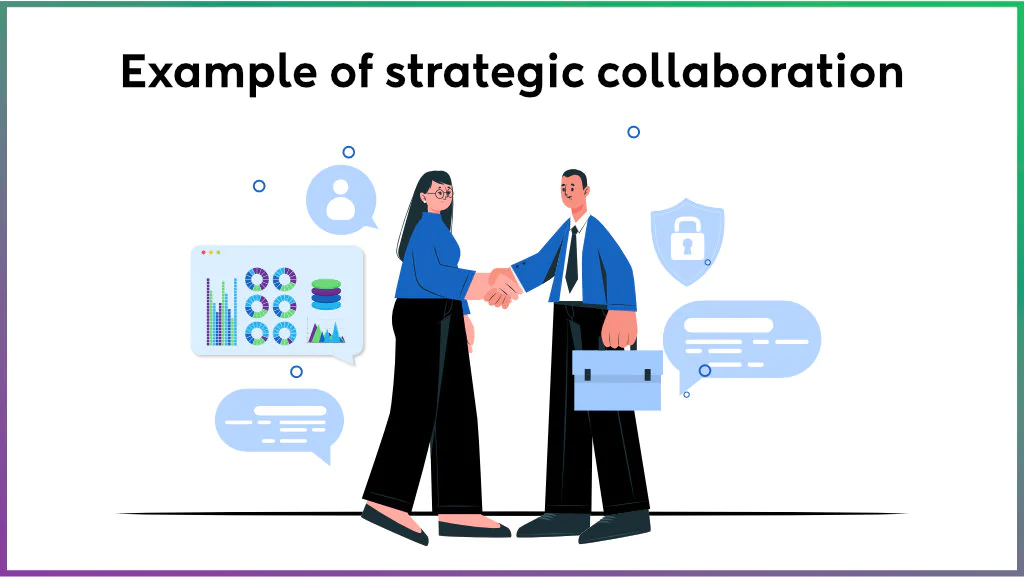
A project management software provider partners with a cybersecurity firm to launch a secure digital workspace for enterprises.
Together, they contribute to developing an integrated platform where the PM team designs collaboration features and workflow capabilities. At the same time, the cybersecurity partner injects threat detection, encrypted data governance, and built-in compliance assurance, giving both partners a competitive edge in the enterprise market.
5. Example of client collaboration
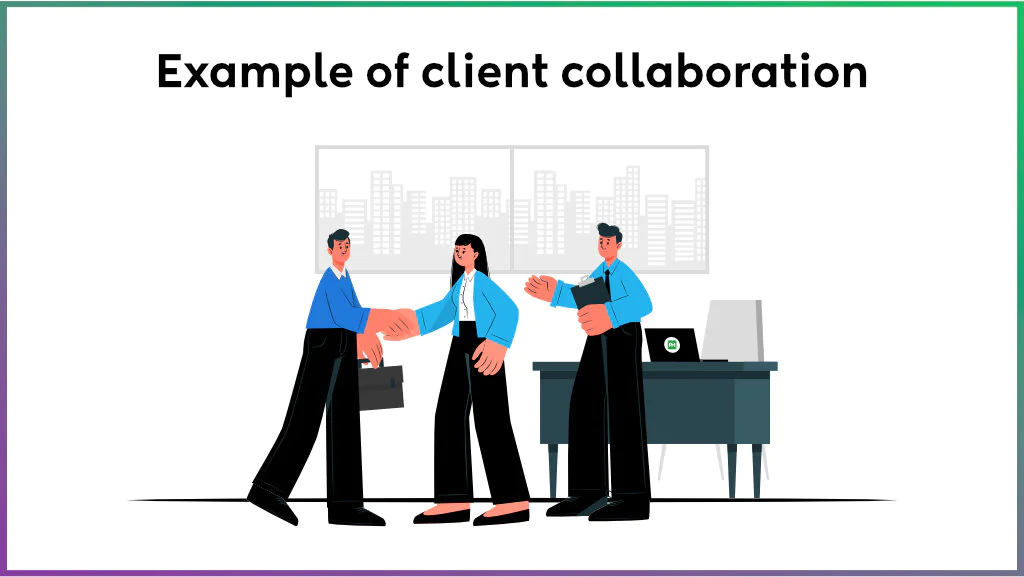
A retail brand wants to refresh its strategy to engage Gen Z consumers. To keep up with the fast-changing trends and bring fresh perspectives to their campaigns, their in-house marketing team collaborates with a group of Gen Z content creators to co-create and test social narratives.
By refining messaging together, sharing audience insights, and aligning on the brand’s values, they co-ideate campaign concepts that feel authentic and deeply resonate with the target audience, driving higher engagement and brand relevance.
6. Example of cross-functional collaboration
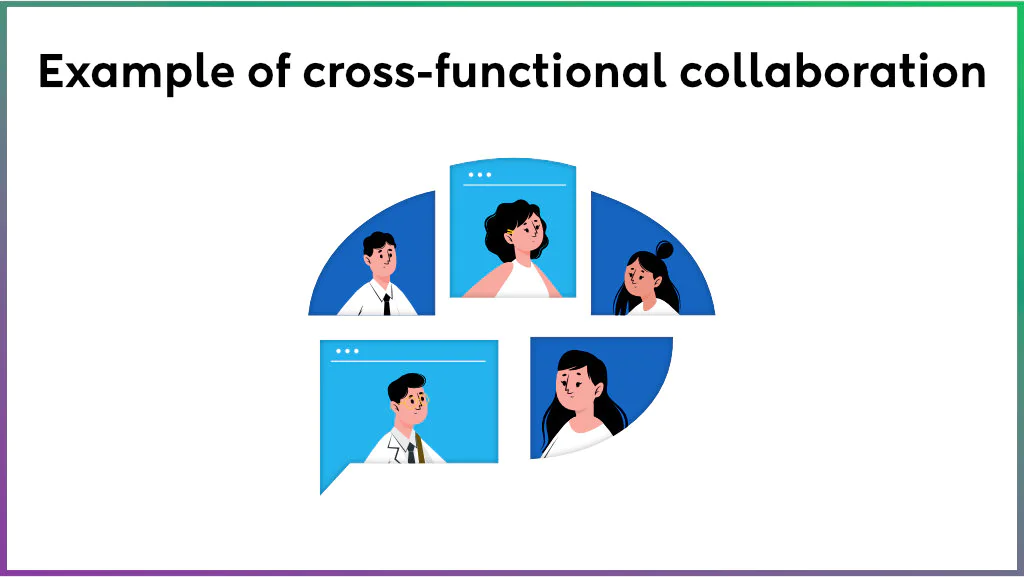
A software company works together as a unit to prepare the launch of a new mobile app feature. The product manager outlines user problems, defines goals, scope, and success metrics, and aligns stakeholders.
UI/UX designers decide the interaction model and apply design system components before handing over final designs to Engineers to write code and build functionality as planned.
The marketing team builds a narrative and crafts a clear value proposition, while the customer support team prepares training resources to assist users. Everyone collaborates closely to deliver a successful launch.
7. Example of project collaboration

A company plans to transition its operations from scattered spreadsheets to a central work management platform. To make the shift smooth, their project team starts by mapping current processes and involving key stakeholders from each department.
Their finance department manages budget controls to maintain financial governance and compliance. The operations team assesses their current workflows and identifies the bottlenecks that slow down execution and coordination. After the initial assessment, the platform’s implementation partners migrate data and configure the system.
Everyone collaborates to test the setup, refine workflows, and keep everything organized, aligned, and visible in one place.
8. Example of remote collaboration
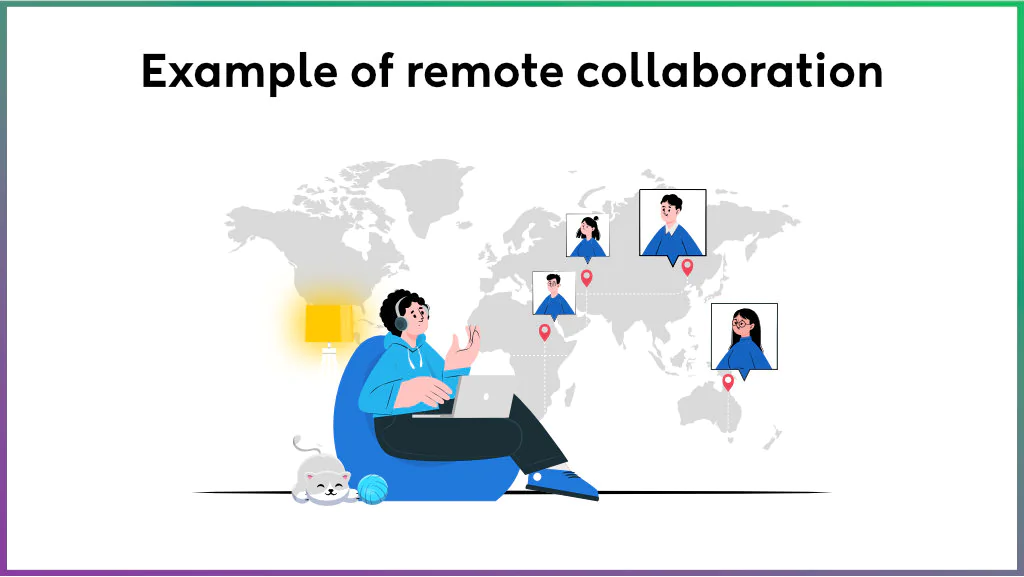
A software company operates with teams spread across different locations and time zones.
To ensure smooth project progression and team alignment, they define clear expectations, set availability hours, and establish a structured collaboration framework. Hence, everyone knows when to connect, hand off work, and expect responses.
Content strategists upload briefs and requirements to a shared workspace, so designers in another region know exactly what to work on and move ahead uninterrupted. Product managers review work by providing feedback via email or comments. For urgent discussions and complex issues, the team schedules video calls during overlapping time zones to resolve blockers in real time.
9. Example of virtual collaboration
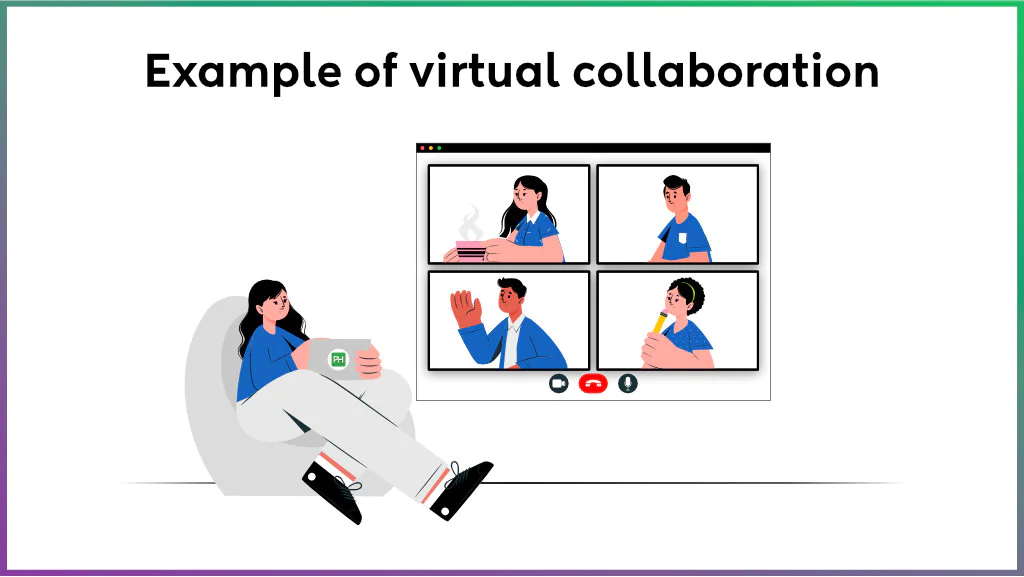
A product marketing team with both co-located and remote members collaborates asynchronously using a central project management solution.
The content strategist documents tasks and attaches user insights directly on the platform, tagging team members to take the next steps without delays or miscommunication.
Designers pick up these tasks, create visuals and layouts, and assign deliverables to the product manager for feedback and prioritizing next steps right on the platform, keeping work transparent, organized, and actionable for everyone.
10. Example of real-time collaboration

A scrum team encounters a glitch in the latest build toward the end of the sprint. During the sprint review, all stakeholders are present in person or on call, and they collaborate in real-time to discuss the issue and agree on a resolution approach.
They update the sprint board and adjust priorities to protect the release timeline. In the next sprint, developers implement the fix while QAs test it across affected features, pushing the patch into production without slowing down the workflow.
11. Example of asynchronous collaboration

A service-based company is creating a visually striking promotional banner to showcase its latest offering.
The copywriter is provided the brief to create a copy that aligns with the messaging guidelines and upload it to the shared platform.
Whenever the schedule allows, the graphic designer reviews the copy, develops the visual concept and layout, and prepares a draft for customer review.
After the draft is ready, the customer is invited on the platform to review the asset, suggest refinements, and leave contextual comments directly on the visual.
The team then collaboratively iterates during working hours, ensuring the final banner aligns with the customer’s expectations.
What can we learn from collaboration examples?
We learn practical ways to communicate effectively, coordinate responsibilities, and combine different strengths to achieve shared goals. Collaboration examples reveal how successful teams establish clear channels of communication that keep everyone informed without creating information overload.
They demonstrate the importance of defining roles and responsibilities early, so team members understand not only what they’re accountable for but also how their work connects to others. Through these examples, we see how different skill sets and perspectives complement each other, creating outcomes that no single person could achieve alone.
Collaboration examples also teach us how to navigate common challenges that arise when working together. They show us strategies for managing shifting priorities without losing momentum, accommodating time-zone differences so that distance doesn’t become a barrier, and handling cross-team dependencies that could otherwise create bottlenecks. We learn how to anticipate potential friction points and address them proactively rather than reactively.
What can we learn from examples of failed collaborations?
Examples of failed collaborations offer insightful lessons for teams, leaders, and organizations on how to work more effectively. These are valuable both to those who experienced the failure firsthand and to others who can learn what not to do to avoid similar pitfalls.
They reveal common pitfalls and highlight process gaps, communication breakdowns, and operational inefficiencies that derailed the collaborative efforts. Sometimes, these failures can be coincidental, arising from unforeseen circumstances beyond anyone’s control.
By analyzing failures and learning from them, teams gain actionable insights on how to improve collaboration strategies to prevent repeated mistakes.
How can collaboration examples improve efficiency?
Collaboration examples help improve efficiency by showing practical ways teams streamline communication, divide work intelligently, and reduce unnecessary back-and-forth. Collaboration examples reveal how successful teams use tools, feedback loops, and role clarity to avoid delays and duplicate efforts. By observing what works well in real scenarios—such as faster decision-making, better task handoffs, and smoother coordination across time zones or departments—organizations can adopt proven practices that eliminate friction and make their workflows more productive.