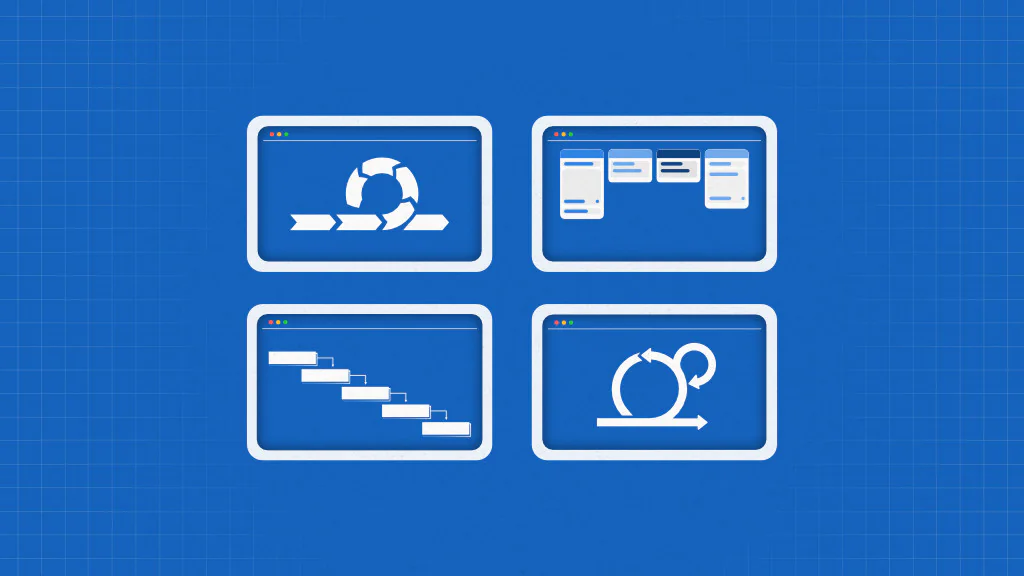
A project management methodology is a structured set of rules, processes, principles, techniques, and practices that standardize how you plan, execute, and close a project.
When individuals with diverse perspectives, experiences, and working styles work together on a project, it is vital to have a standardized way of functioning to work effectively and efficiently.
In this post, we will learn about what project management methodology is, why it is important, the types of project management approaches, popular project management methodologies, and more.
- 1.A project management methodology is a set of rules, processes, and techniques that standardize project planning, execution, and closure.
- 2.The three types of project management methodologies are predictive, adaptive, and hybrid.
- 3.The most common project management methodologies include Waterfall, Agile, Scrum, Kanban, Hybrid, Critical Path Method, Lean, and Six Sigma.
- 4.Common challenges in using a project management methodology are choosing the wrong methodology, resistance to change, a rigid approach, and inadequate training.
What does project management methodology mean?
A project management methodology is a structured set of rules, principles, processes, techniques, and practices that guide project managers from initiation to end.
It answers fundamental questions of a project: what do we do first, how do we organize the team, how do we handle changes, how do we know if we are on track, how do we manage risks, how do we make decisions, and so on.
The most common project management methodologies include Waterfall, Agile, Scrum, Kanban, Hybrid, Critical Path Method, Lean, and Six Sigma.
What are the benefits of using project management methodologies?
The benefits of adopting project management methodologies are operational consistency, clarity and structure, improved communication, better planning and control, and reduced risks.
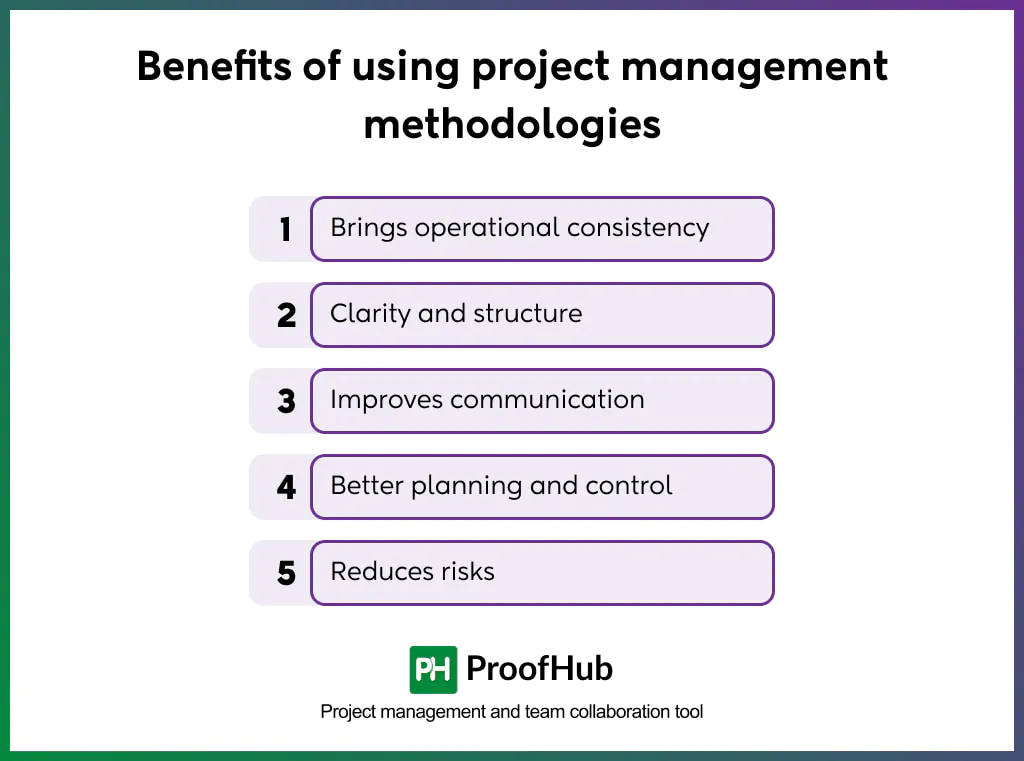
- Brings operational consistency: Standardizes how projects are managed, making project outcomes repeatable and predictable.
- Clarity and structure: Guides everyone on what to do, when, and how by providing a framework, processes, roles, tools, artifacts, and rules.
- Improves communication: Creates a shared understanding through standardized terminology, reducing misunderstandings, miscommunication, and helping avoid conflicts.
- Better planning and control: Provides clear processes to address different aspects of a project and defined decision-making principles.
- Reduces risks: Enables early risk identification and effective risk mitigation. Resulting in fewer surprises during execution, increasing the chances of project success.
What are the types of project management methodologies?
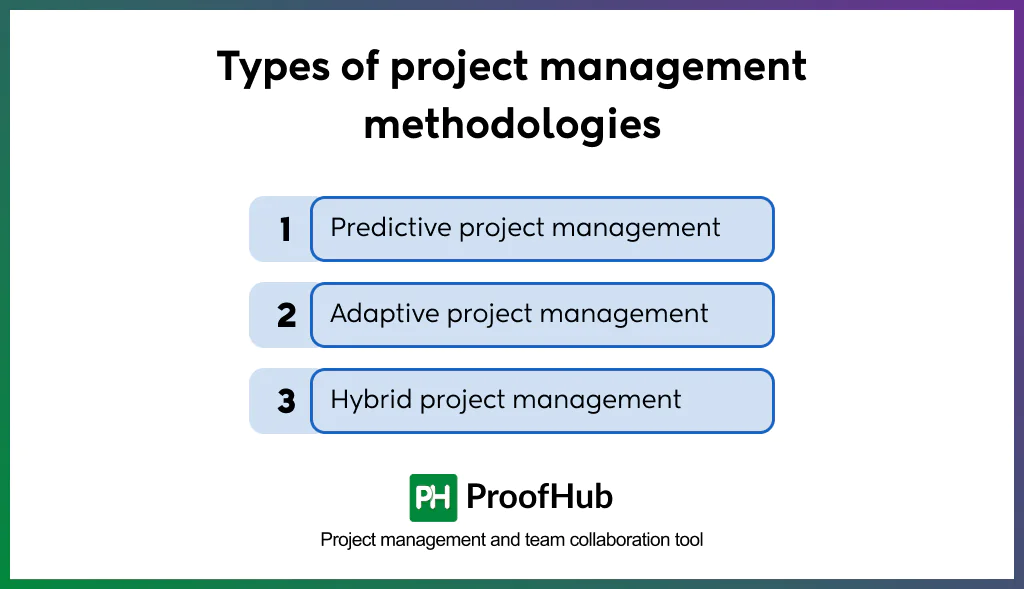
The three project management methodologies are predictive, adaptive, and hybrid.
1. Predictive project management
Predictive project management is a linear and sequential approach to project management. It focuses on upfront planning and step-by-step execution in a defined order.
It provides better control over projects through more predictable resources, clear milestones, and a definitive plan.
This approach is highly effective when requirements are stable, and the end goal is clear.
It is not suitable for projects that require frequent changes, as it triggers the cycle of initiation, planning, and execution.
2. Adaptive project management
Adaptive project management is an iterative and incremental approach. It adjusts the project scope, schedule, and timeline as the changes are made.
Teams work flexibly, make frequent changes, and continuously refine outcomes. It uses short iterations, frequent reviews, and stakeholder feedback to adapt as project requirements change.
The approach is suitable for dynamic projects where requirements are uncertain, and the plan requires frequent changes. However, its iterative nature reduces upfront control, stability, or resource estimates.
3. Hybrid project management
Hybrid project management is a blend of predictive and adaptive approaches.
It uses a predictive approach for planning during the initial stages and an adaptive approach for execution in iterative cycles.
This offers the project manager both stability and adaptability during project management.
This approach works great for projects that require structured planning and flexible execution.
Which are popular project management methodologies?
The nine popular project management methodologies are: Waterfall, Agile, Scrum, Kanban, Water-Scrum-Fall, PRINCE2, Critical Path Method, Lean, and Six Sigma.
1. Waterfall
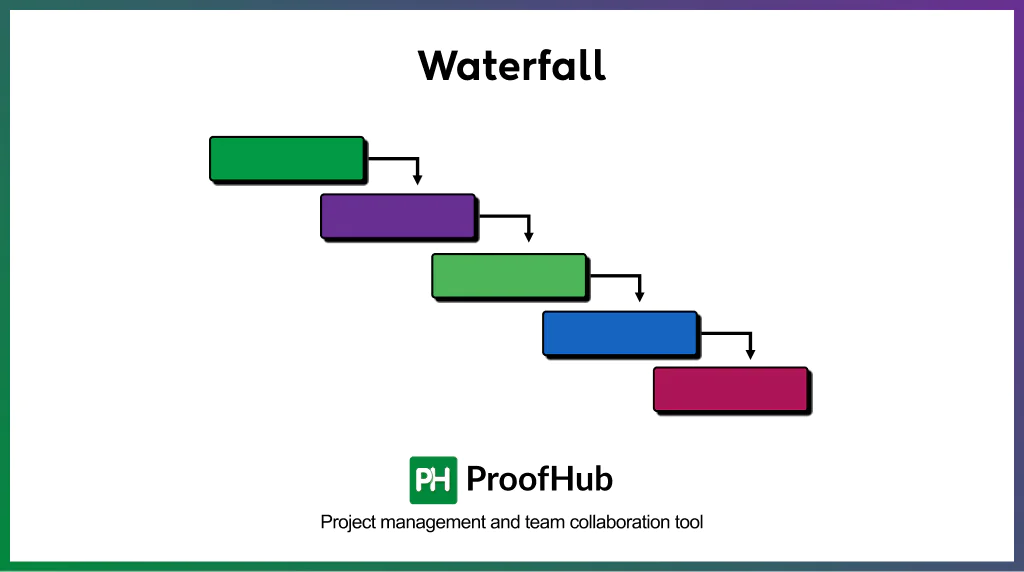
Waterfall methodology is a linear, sequential approach where each phase completes before the next begins. It relies on defining clear project requirements, upfront planning, and heavy documentation.
The core stages or phases of the waterfall model are:
Requirements gathering → design → implementation → testing → deployment → maintenance
This step-by-step progression mimics the flow of water falling over a series of steps. Thus, the methodology is called the waterfall method.
It provides a high-level control with a detailed overview of the entire project’s resources, budget, timeline, schedule, and risks. Project deliverables are launched in one big launch at the end of the project.
Waterfall is the right choice for construction and manufacturing projects with fixed legal or regulatory requirements.
Due to its rigid structure, it is not ideal for projects with unclear requirements and changing market dynamics.
2. Agile
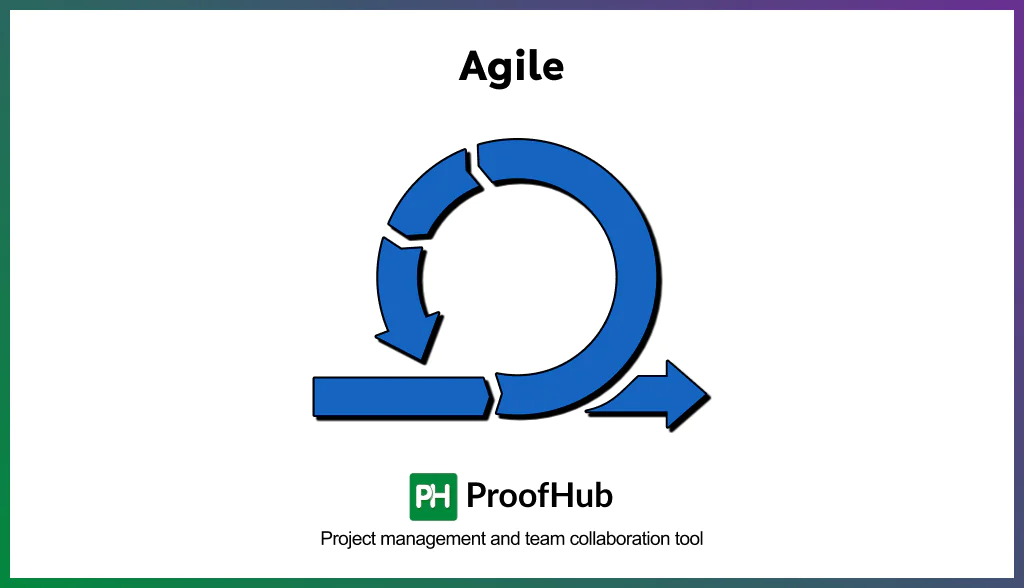
Agile is an iterative, incremental approach to project management. It is based on the four core Agile values and 12 Agile principles defined in the Agile manifesto.
It breaks a project into small iterations (sprints) and works on it in short cycles. It delivers value at each iterative cycle and enables collaboration with stakeholders to quickly update project requirements.
Agile is the right choice for software development and projects where requirements evolve, rapid feedback is required, and market dynamics change over time.
However, Agile does not provide the certainty, stability, and control of waterfall due to its structure. The entire project scope is not planned up front.
Agile methodology is applied to the project using frameworks such as Scrum for sprints and Kanban for visualizing workflow.
3. Scrum
Scrum is an Agile methodology that uses small, time-boxed iterative cycles, called sprints. The cycle usually lasts 1-4 weeks to work in iterations.
At the end of each sprint, a deliverable is produced and released for stakeholder feedback. The suggested improvements are incorporated into the next sprints.
Scrum uses its own tools, processes, and artifacts that are applicable only to Scrum. It includes:
- Time-boxed sprints
- Ceremonies: Sprint planning, Sprint review, and Sprint retrospective.
- Artifacts: Product backlog, Sprint backlog, and Increment.
- Defined roles: Product owner, Scrum team, and Scrum master.
Scrum is an ideal framework for projects where requirements evolve, and the team requires quick collaboration.
For example, in software development projects where stakeholders’ needs are not clear, the team’s tasks are interdependent.
4. Kanban
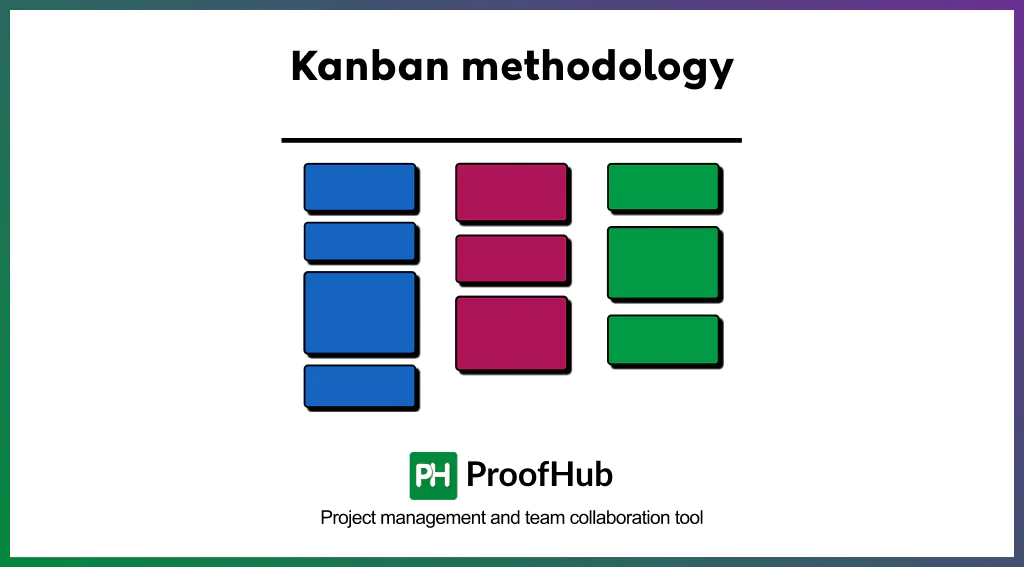
Kanban is also a framework of Agile methodology that involves working in short cycles. It uses a Kanban board and WIP limits.
A Kanban board is a central tool that visualizes the workflow and organizes user stories into columns such as To Do, In Progress, and Done.
A WIP limit is a rule that limits the amount of work to be done based on the team’s capacity. It is set on the column and indicates the maximum number of tasks in that column.
All the work to be completed in a project sits in the To-Do column. The project team picks the work to be completed based on the team’s capacity, works on it, and delivers continuously as soon as the user story or feature is completed for feedback. This loop repeats, ensuring faster delivery and greater flexibility than Scrum, where you have to wait for the sprint to complete.
Kanban is an ideal framework for projects that involve managing ongoing, repetitive tasks. For example, operational teams like customer support, where tasks arrive unpredictably and need to be addressed as they come in, with a focus on efficiency and minimizing delays.
5. Water-Scrum-Fall
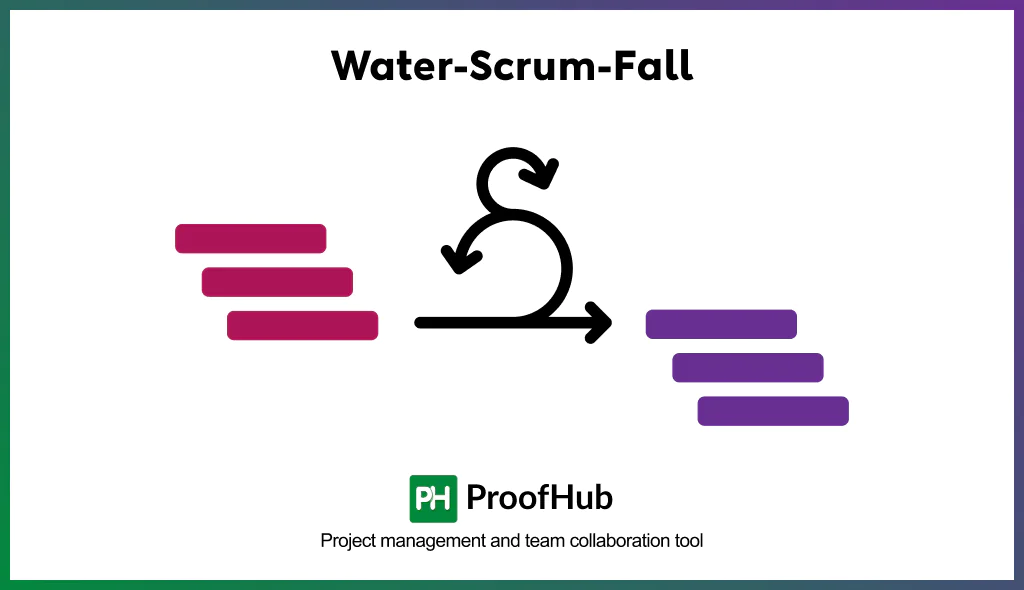
Water-Scrum-Fall is a hybrid project management methodology that combines elements of Waterfall and Scrum methodologies to manage projects that require both stability and flexibility.
It utilizes the principles of Waterfall during the planning and the principles of Agile-Scrum during the execution and development.
The closure again follows the structured process of final testing, integration, and delivery. Thus, it is named Water-Scrum-Fall.
This methodology is ideal for a project that requires significant upfront documentation and approval processes, and client demands Agile development.
6. PRINCE 2
PRINCE2 (Projects in Controlled Environments) is a highly structured project management methodology that divides a project into manageable stages with a formal review at the end of each stage.
The Project Board decides whether to authorize the next stage. It uses predefined roles, seven principles, seven themes, and seven processes to provide detailed guidance on different aspects of project management.
PRINCE2 places strong emphasis on governance, with formal structures for oversight, decision-making authority, and accountability.
PRINCE2 is ideal for large-scale, high-risk projects with strict deadlines, budgets, and compliance requirements, as well as accountability, such as IT system implementations or public sector initiatives.
However, PRINCE2’s rigidity and documentation requirements can slow progress in dynamic or fast-moving industries.
7. Critical path method (CPM)
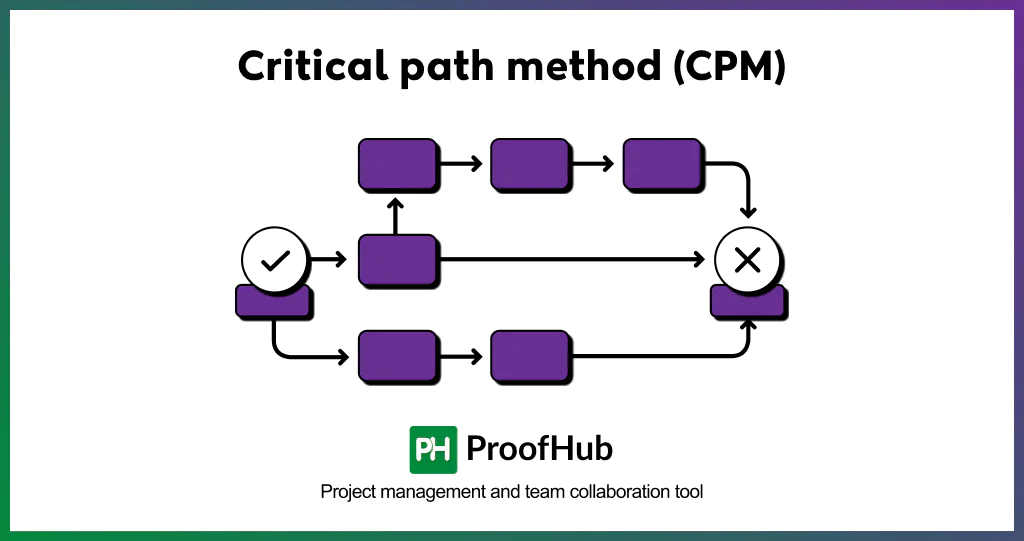
Critical Path Method (CPM) is a scheduling technique that identifies the longest sequence of dependent tasks. It determines the minimum duration required to complete a project.
The project manager maps all tasks in a project, along with their durations and dependencies to calculate the critical path.
Tasks on the critical path have zero float (also called zero slack), meaning any delay to a task on the critical path directly delays the project completion date.
CPM is particularly well-suited for large-scale, complex projects with well-defined tasks and clear project dependencies.
It helps project managers create an optimized project schedule by focusing on tasks that directly impact the overall timeline.
8. Lean
Lean emphasizes delivering value to the customer while eliminating waste throughout the project lifecycle. It focuses on value, reducing waste, and continuous improvement.
Lean identifies seven classic categories of waste (using the Japanese word muda): overproduction, waiting, transportation, over-processing, inventory, motion, and defects.
In manufacturing, these are physical phenomena. In project management and knowledge work, they manifest differently but are equally real: work that sits in a queue waiting for someone’s approval (waiting), documentation that nobody reads (over-processing), doing work before it is needed (overproduction), fixing errors that should have been caught earlier (defects).
9. Six Sigma
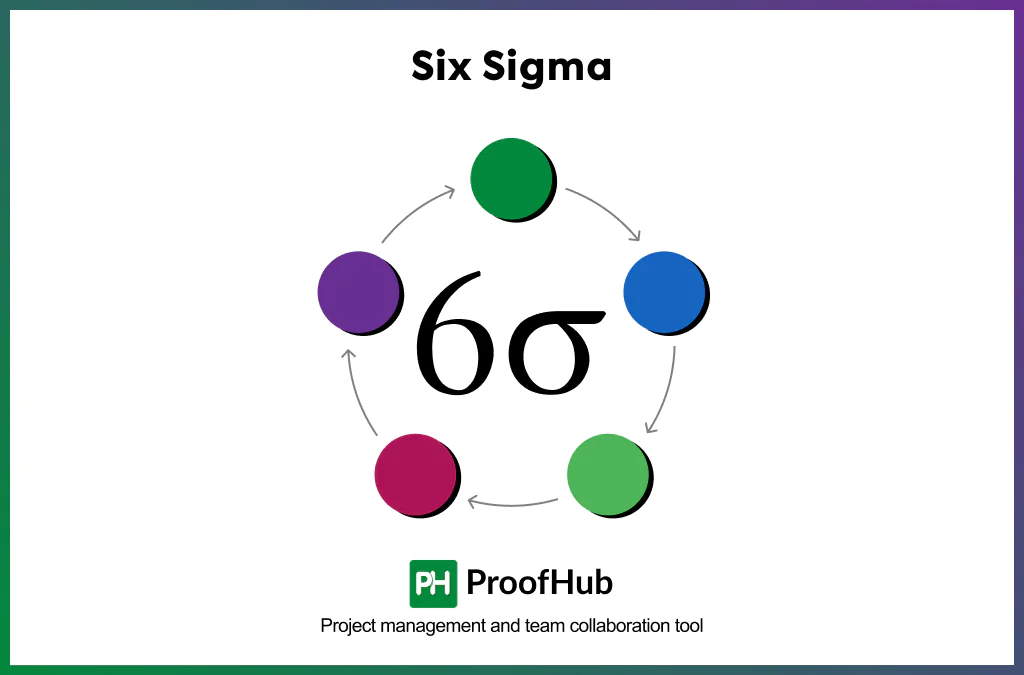
Six Sigma is a data-driven methodology that focuses on achieving measurable, sustainable quality improvements by using statistical analysis to identify and eliminate inefficiencies and defects.
Six Sigma processes are so consistent that they produce fewer than 3.4 defects per million opportunities — an extremely high level of quality.
Six Sigma provides a structured problem-solving process called DMAIC:
- Define: Clearly define the problem you are trying to solve, the project goals, and the customer requirements.
- Measure: Collect data on the current process to understand its baseline performance. You cannot improve what you cannot measure.
- Analyze: Use statistical tools to identify the root causes of defects and variation. This is where the data is interrogated rigorously.
- Improve: Develop, test, and implement solutions that address the root causes identified.
- Control: Establish monitoring systems to ensure the improvements are sustained over time, and the process does not revert to its old behavior.
It is most appropriate for manufacturing, healthcare, and financial services projects where processes are repetitive and measurable, and where defect rates have direct cost or safety implications.
How to choose the right project management methodology?
To choose the right project management methodology, consider project requirements and characteristics, team size and characteristics, and organizational culture.
1. Determine project requirements and characteristics
Determine whether the project requirements are well understood or likely to change. A project with fixed requirements might thrive with a structured methodology like Waterfall, while a larger, more complex project with evolving requirements might benefit from an iterative approach like Agile.
Find out the industry and the complexity. A longer project with evolving industry dynamics, such as an IT project, benefits from an iterative approach as requirements change over time.
Similarly, a project with stable requirements, low risk tolerance, and high regulatory requirements may benefit from the waterfall, as it provides structure.
2. Define team size
Find out how experienced the team is. Agile methodologies require significant discipline and experience to be executed effectively.
A team new to Scrum often struggles without coaching. Waterfall may be more appropriate for a less experienced team because its sequential structure provides clear guidance on what to do next.
Identify the team’s size and distribution. Scrum works best with small, co-located or closely coordinated teams. Large, geographically distributed teams may need SAFe (Scaled Agile Framework) or other scaling approaches.
Very small teams (two to three people) may not need Scrum’s overhead and would be better served by Kanban.
3. Consider organizational culture
Consider your organization’s work style and preferences. Does your leadership and workforce thrive in a collaborative environment?
Agile methodologies might be a good fit. Does your organization have a history of well-defined, structured workflows? Waterfall methodologies might be more suitable.
Sometimes, some organizations have standardized on a particular methodology, and some clients require specific certifications (PMP, PRINCE2) from their project managers. In those cases, these constraints sometimes override internal preferences.
Keeping these factors in mind, you can choose the right project management methodology for your project.
What are the challenges in using project management methodologies?
Common challenges in using a project management methodology include choosing the wrong methodology, resistance to change, misapplication of the methodology, a rigid approach, and inadequate training.
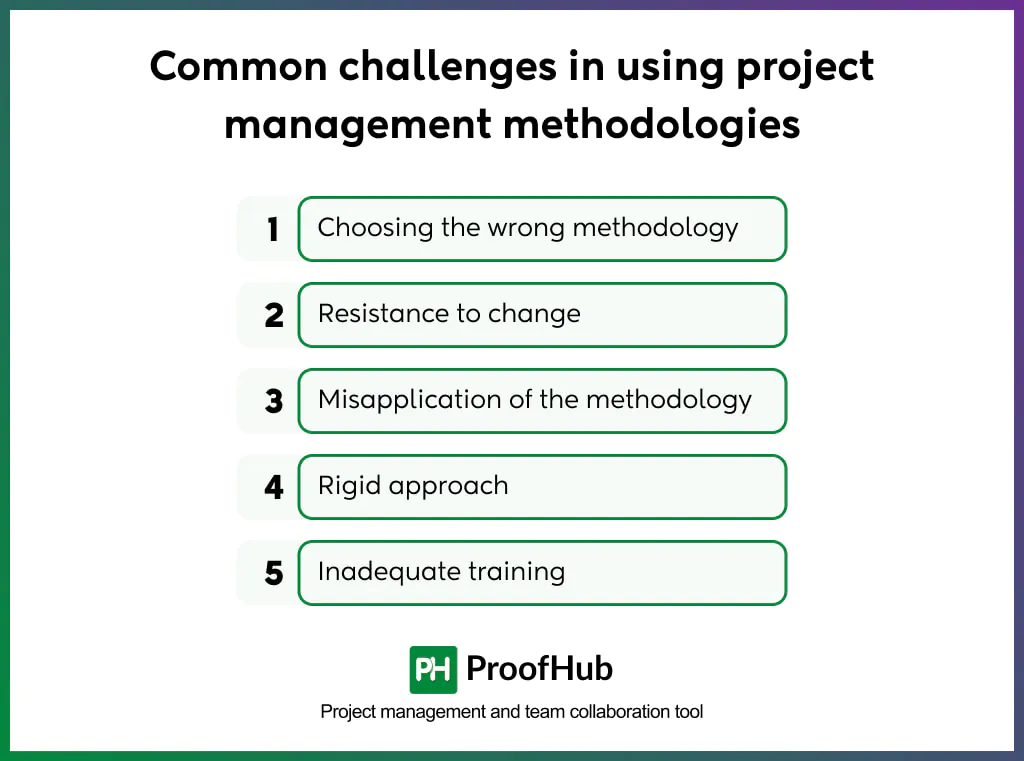
- Adopting the wrong methodology: It leads to high failure rates. For example, applying the waterfall model to a software product with evolving requirements results in rigid planning. Similarly, using Scrum for a project with stable requirements leads to unnecessary inefficiencies.
- Resistance to change: Team members often push back when an organization introduces a formal methodology. The new processes are viewed as unnecessary overhead that slows them down rather than helps them.
- Misapplication of the methodology: Teams adopt a methodology without understanding its underlying principles. For example, Daily Scrum standups often become regular meetings rather than a tool of team alignment when team members conduct them without understanding their purpose.
- Rigid approach: Teams following a methodology strictly without sensing circumstances, which may lead to becoming a constraint rather than a tool.
- Inadequate training: Teams without a deep understanding of methodologies lead to incorrect implementation, underutilization, and poor results.
What is the difference between Waterfall and Agile methodologies?
The main difference between Waterfall and Agile methodologies lies in their approaches to project management.
Waterfall assumes requirements are known and stable, whereas Agile assumes requirements are uncertain and will change.
Based on this conceptual difference, here’s a detailed comparison table highlighting their key differences:
What is the difference between Agile and Scrum methodologies?
The main difference between Agile and Scrum methodology is that Agile is a set of principles, while Scrum is a framework to implement those principles.
Agile defines how work should be approached.
Agile stems from the Agile Manifesto, which articulates four core values and 12 principles centered on iterative delivery, customer collaboration, and embracing change.
Whereas Scrum provides a framework for applying the Agile values and principles. It includes: three defined roles (Product Owner, Scrum Master, Development Team), five events (Sprint Planning, Daily Scrum, Sprint Review, Sprint Retrospective, and the Sprint itself), and three artifacts (Product Backlog, Sprint Backlog, Increment).
Can multiple methodologies be used in one project?
Yes, and in practice this is extremely common. Using elements from multiple methodologies in a single project is called a hybrid approach, reflecting the reality that no single methodology perfectly fits every situation a project encounters.
A typical hybrid might involve using PMBOK-style initiation and planning processes, such as a formal project charter, stakeholder register, and risk register, because the organization or client requires that level of governance, while executing the actual work using Scrum sprints because the team finds iterative delivery more effective.
Which methodology is best suited for small projects?
For small projects with a clear, fixed scope and a short duration, basic PMBOK phases of initiation, planning, execution, and closure, or the Waterfall methodology, provide all the structure needed without any methodological overhead. It is because simplicity and low overhead are the primary considerations for small projects.
For small projects and small teams with unclear requirements, Kanban is often the best starting point. The methodology must provide enough structure to keep the work organized without consuming more time than the project itself.
Which methodology is best suited for large projects?
PRINCE2, PMBOK, and Agile are the most widely used frameworks for large projects because both provide comprehensive governance structures.
Large projects with many people, significant budgets, long timelines, multiple organizations, or regulatory requirements require methodologies that provide strong governance, clear accountability structures, and mechanisms to manage complexity at scale.